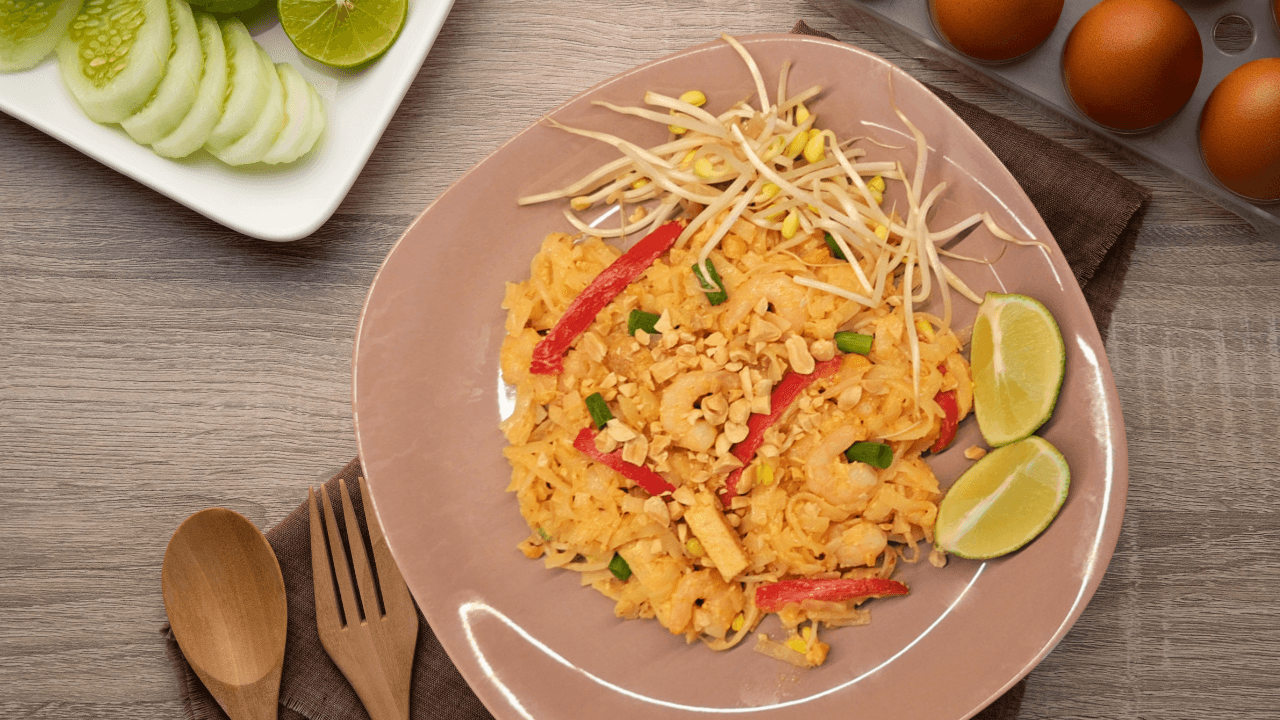
This Pad Thai recipe combines rice noodles with shrimp, tofu, egg, bean sprouts and peanuts in a sweet, sour and savory tamarind sauce. The noodles are stir-fried quickly over high heat, then finished with lime, extra peanuts and fresh bean sprouts for a bright, crunchy finish.
Watch how to make Pad Thai
Ingredients
Noodles
- 200 g flat rice noodles
For the sauce
- 6 tbsp tamarind paste, not concentrate
- 6 tbsp packed brown sugar
- 6 tbsp fish sauce
- 9 tbsp water
For the stir-fry
- 2 tbsp vegetable or canola oil, plus a little extra if needed
- 1 small onion, chopped
- 2 garlic cloves, finely chopped
- 200 g medium shrimp, peeled and deveined
- 85 g firm tofu, patted dry and cut into batons
- ½ red bell pepper, thinly sliced
- 2 eggs, lightly beaten
- 100 g bean sprouts, plus a little extra for serving
- 1 green onion, cut into short lengths
- ½ cup finely chopped roasted peanuts, divided
- Dried chili flakes, to taste, optional
For serving
- Lime wedges
- Extra bean sprouts
Instructions
Prepare the noodles
Place the rice noodles in a large bowl and cover with plenty of boiling water.
Leave them to soak for about 3 minutes, then drain and rinse briefly under cold water.
Do not soak them for too long, or they may become too soft. Depending on the brand and thickness of the noodles, the soaking time may vary slightly.
Use kitchen scissors to cut through the drained noodles once or twice so they are easier to toss and separate in the pan.
Make the sauce
In a small bowl, stir together the tamarind paste, brown sugar, fish sauce, and water.
Set aside.
Cook the shrimp
Heat a wok or large nonstick skillet over high heat.
Add just enough oil to lightly coat the base of the pan.
Add the shrimp and cook for about 1 to 2 minutes per side, or until pink and just cooked through.
Remove the shrimp from the pan and set aside.
Stir-fry the vegetables and tofu
Add a little more oil if needed, then add the onion.
Cook for about 30 seconds, then add the red bell pepper, tofu, garlic, and chili flakes if using.
Stir-fry for a few minutes, until the garlic is fragrant and the onion has softened.
If the pan looks dry, add a little more oil to help keep the noodles from sticking together.
Add the noodles and eggs
Add the noodles and pour in the sauce.
Toss everything together until the noodles absorb the sauce.
Once most of the sauce has been absorbed, check the noodles. If they are still a little firm, add a small splash of water and continue cooking briefly.
Add the water a little at a time so the noodles do not become soggy.
Push the noodles to one side of the pan.
Add a small drizzle of oil to the empty side, then pour in the beaten eggs.
Let the eggs set for a few seconds, then gently break them up and fold them into the noodles.
Finish and serve
Return the shrimp to the pan along with any juices.
Add the bean sprouts, green onion, and half of the chopped peanuts.
Turn off the heat and toss everything together until well combined.
Serve immediately with the remaining peanuts sprinkled over the top, lime wedges on the side, and extra bean sprouts if desired.
Squeeze fresh lime juice over the Pad Thai just before eating.
Recipe Notes
Use tamarind paste, not concentrate
This recipe is written for tamarind paste rather than concentrated tamarind. Concentrate can be much stronger, so using the same quantity could make the sauce overly sour.
Do not oversoak the noodles
The rice noodles only need a short soak before stir-frying. They should still have some firmness when drained because they will continue cooking in the pan with the sauce. Different brands and noodle thicknesses may require slightly different soaking times.
Add water gradually if needed
If the noodles are still too firm after absorbing most of the sauce, add only a small splash of water at a time. Too much liquid can quickly make the noodles soft or soggy.
Keep the pan hot
Pad Thai cooks quickly, so have the ingredients prepared before you start stir-frying. A hot wok or skillet helps the ingredients cook rapidly without sitting in the pan for too long.
Do not overcook the shrimp
Cook the shrimp only until pink and just cooked through, then remove them from the pan. Returning them near the end keeps them tender instead of rubbery.
Adjust the heat at the table
The chili flakes are optional, so you can keep the Pad Thai mild and let each person add extra chili and lime to taste when serving.
Learn more about Pad Thai
Want to learn more about the dish, its flavors, variations and place in Thai food culture? Read our guide to Pad Thai.