Thai

  • Tom Yum Goong

    Tom Yum Goong

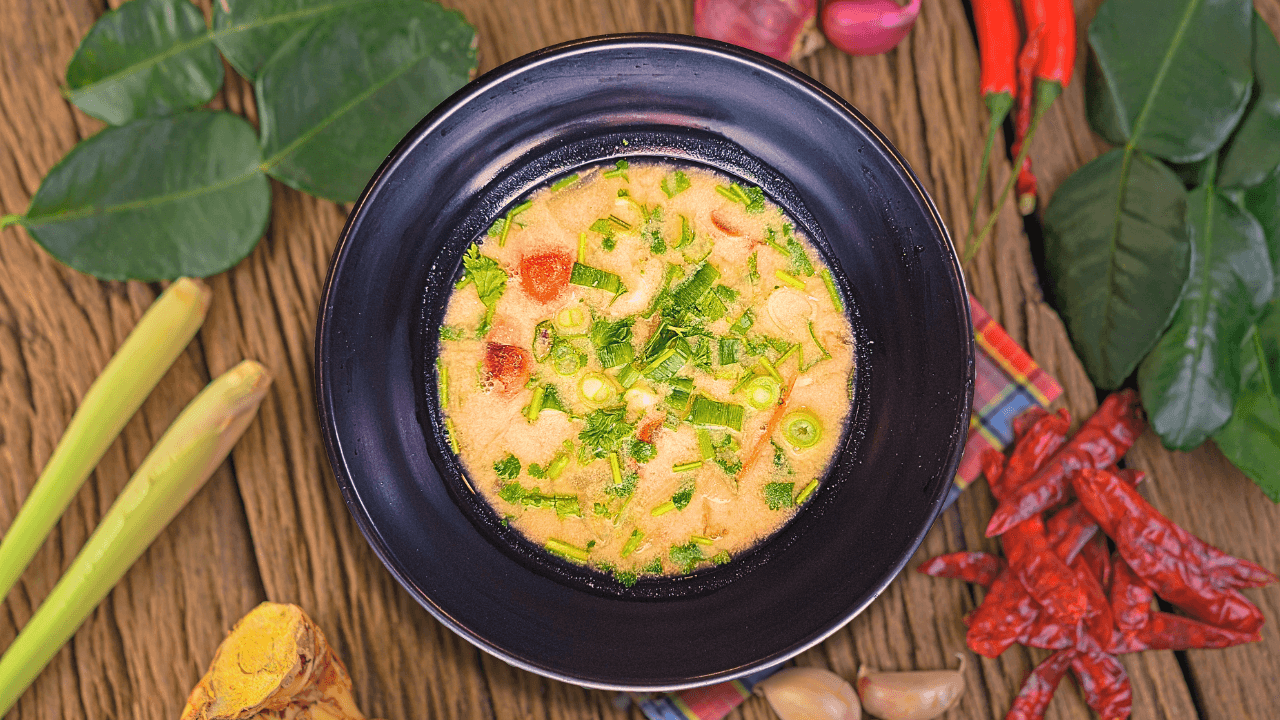
    Tom Yum Goong is a Thai hot-and-sour shrimp soup flavored with lemongrass, galangal, makrut lime leaves, chilies and lime juice. Bright, aromatic and deeply savory, it balances heat, acidity and saltiness, while this creamy version adds evaporated milk for a softer, richer finish.

    What is Tom Yum Goong?

    Tom Yum Goong is a Thai hot-and-sour soup made with shrimp and a highly aromatic broth. Its characteristic flavor comes from ingredients such as lemongrass, galangal, makrut lime leaves, Thai chilies, fish sauce and fresh lime juice, creating a balance of sour, salty, spicy and savory flavors.

    In this creamy version, shrimp shells and heads are first used to build a flavorful broth before mushrooms, onions and tomatoes are added. The shrimp are cooked only briefly, and evaporated milk is stirred in near the end to soften the soup’s sharpness while preserving its bright, aromatic character.

    Tom Yum Goong in Thai food culture

    Tom Yum Goong is one of Thailand’s best-known soups and a classic example of the balance that defines much of Thai cooking. The combination of sour lime, salty fish sauce, fresh chilies and fragrant herbs creates a broth that is intensely aromatic without relying on long cooking.

    The word goong means shrimp, distinguishing this version from other types of tom yum made with different proteins. Both clear and creamy styles are common, with the creamy version often enriched with evaporated milk or another creamy ingredient while keeping the soup’s characteristic hot-and-sour flavor.

    What does Tom Yum Goong taste like?

    Tom Yum Goong is bright, sour, spicy and deeply aromatic, with layers of citrus, herbs and savory seafood flavor. Lemongrass, galangal and makrut lime leaves give the broth its distinctive fragrance, while Thai chilies bring heat and fish sauce adds salty depth.

    Fresh lime juice provides the sharp acidity that defines the soup, while the shrimp contribute sweetness and richness. In this creamy version, evaporated milk rounds out the flavors and softens the acidity and heat without masking the freshness of the aromatics.

    How Tom Yum Goong varies

    Tom Yum Goong can be prepared in both clear and creamy styles. The clear version keeps the broth light and sharply focused on the aromatics, lime juice, chilies and fish sauce, while creamy versions add ingredients such as evaporated milk to create a richer, softer finish.

    The balance of sourness, saltiness and heat also varies from cook to cook, as does the choice of mushrooms and the amount of chili used. This version is a large-batch creamy Tom Yum Goong made with shrimp, mushrooms, tomatoes and evaporated milk, with the seasoning adjusted at the end to taste.

    Where does Tom Yum Goong come from?

    Tom Yum Goong originated in the Central Plains of Thailand, where riverside communities had ready access to freshwater prawns and a wide range of aromatic herbs. The dish developed from the combination of locally available shrimp with ingredients such as lemongrass, galangal and makrut lime leaves, creating the hot, sour and fragrant soup now associated with Thai cuisine.

    Over time, Tom Yum Goong spread throughout Thailand and became one of the country’s most recognizable dishes. Its cultural importance was formally recognized in 2024, when UNESCO inscribed Tomyum Kung on the Representative List of the Intangible Cultural Heritage of Humanity.

    Make Tom Yum Goong at home

    Ready to make it yourself? Follow the full Tom Yum Goong recipe with ingredients, step-by-step instructions, recipe notes and video.
  • Pad Thai

    Pad Thai

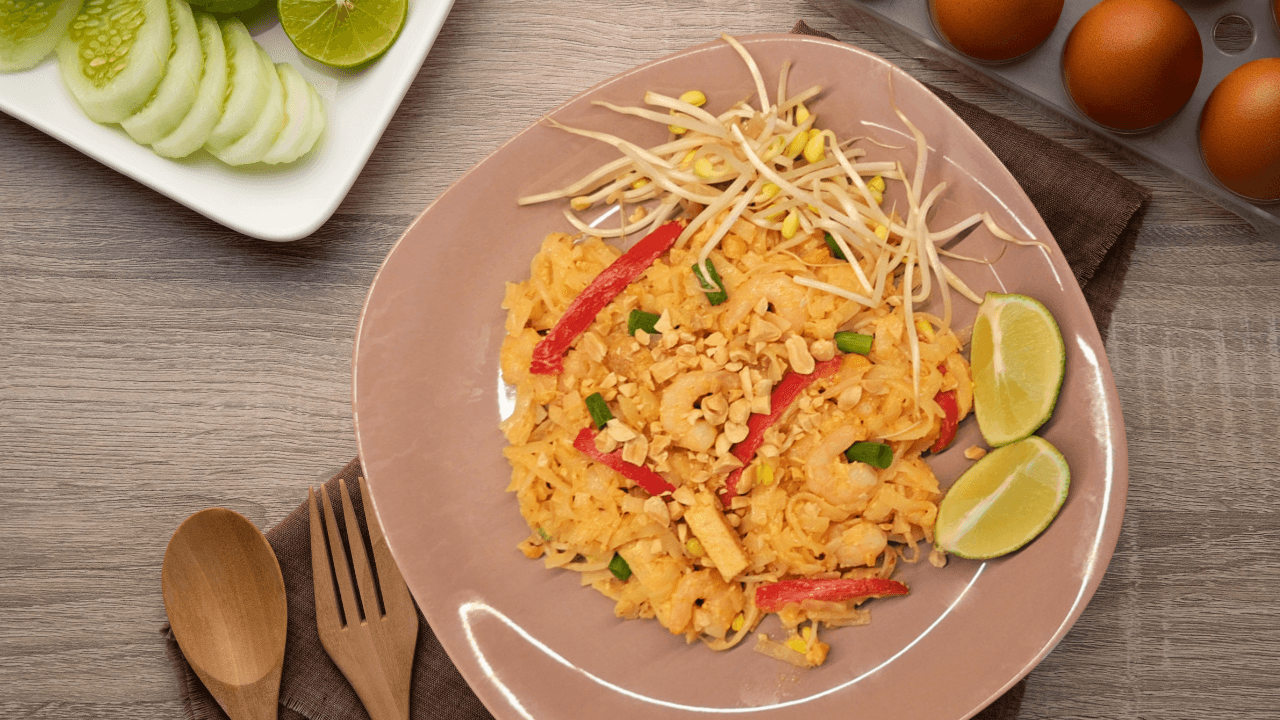
    Pad Thai is a Thai stir-fried noodle dish made with rice noodles, shrimp, tofu, eggs, bean sprouts and peanuts, all coated in a sweet, sour and savory tamarind-based sauce. Lime and chili are often added at the table for extra brightness and heat.

    What is Pad Thai?

    Pad Thai is a Thai stir-fried noodle dish made with flat rice noodles and a sauce built around tamarind, fish sauce and sugar. It commonly includes ingredients such as egg, tofu, bean sprouts, peanuts and a protein such as shrimp or chicken.

    The noodles are stir-fried quickly over high heat so they absorb the sauce while staying tender rather than soft or mushy. The finished dish is usually served with lime, peanuts, and additional bean sprouts, allowing each person to adjust the flavor and texture at the table.

    Pad Thai in Thai food culture

    Pad Thai is one of Thailand’s best-known noodle dishes and is widely associated with the country’s street-food culture. It is commonly cooked quickly to order in a wok, with the noodles, sauce, egg, tofu and other ingredients tossed together over high heat.

    Part of the appeal of Pad Thai is the balance of flavors and textures in a single dish: sour tamarind, salty fish sauce, sweetness, tender noodles, crunchy peanuts and fresh bean sprouts. Lime wedges and chili are often served alongside so diners can adjust the acidity and heat to their own taste.

    What does Pad Thai taste like?

    Pad Thai is sweet, sour, salty and savory, with tamarind providing its characteristic tang, fish sauce adding depth and brown sugar rounding out the sauce. The rice noodles absorb these flavors while remaining soft and slightly chewy.

    Shrimp, egg and tofu add richness, while bean sprouts and peanuts bring freshness and crunch. A squeeze of lime brightens the dish, and chili flakes can add as much heat as you like.

    How Pad Thai varies

    Pad Thai varies widely depending on the cook, region and ingredients available. Common proteins include shrimp, chicken and tofu, while some versions add extra vegetables or leave out certain components entirely.

    The balance of tamarind, fish sauce and sugar also changes from recipe to recipe, creating versions that are more tangy, savory or sweet. Garnishes can vary as well, but peanuts, bean sprouts, lime and chili are among the most common finishing touches.

    Where does Pad Thai come from?

    Pad Thai developed in Thailand from a broader tradition of stir-fried rice noodle dishes influenced by Chinese cooking techniques. Its modern form became especially prominent during the 20th century, when the Thai government promoted it as part of a wider effort to encourage a shared national food identity.

    The dish went on to become one of Thailand’s most recognizable foods, both at home and internationally. Although its exact origins are more complex than a single invention story, Pad Thai is now firmly associated with Thai street food and everyday cooking.

    Make Pad Thai at home

    Ready to make it yourself? Follow the full Pad Thai recipe with ingredients, step-by-step instructions, recipe notes and video.

  • Tom Yum Goong

    Tom Yum Goong

    This Tom Yum Goong recipe makes a large batch of creamy Thai hot-and-sour shrimp soup with lemongrass, galangal, makrut lime leaves, Thai chilies, mushrooms and tomatoes. The shrimp shells and heads are used to build the broth first, then the soup is finished with fish sauce, lime juice, evaporated milk and fresh cilantro for a bold balance of sour, spicy, salty and savory flavors.

    Watch how to make Tom Yum Goong

    Ingredients

    • 4 liters (about 17 cups) water
    • 8 stalks lemongrass
    • 1 generous handful galangal, cut into strips
    • 20 makrut lime leaves
    • 10 Thai chilies
    • 10 garlic cloves, peeled
    • 1 kg (about 2.2 lb) shrimp
    • 500 g (about 1.1 lb) mushrooms
    • 4 Roma tomatoes
    • 3 medium white onions
    • 2 spring onions
    • 4 tsp sugar
    • 8–12 tbsp fish sauce, or to taste
    • Juice of 12 limes, plus 1 extra lime for serving
    • 1 large bunch cilantro
    • 1 can evaporated milk, 250 g (8.8 oz)

    Instructions

    Prepare the aromatics

    Tear the makrut lime leaves to help release their flavor. Trim the lemongrass by removing the tough outer layer, then lightly bruise the stalks with a mallet. Lightly pound the galangal as well.

    Keep the Thai chilies whole for a milder soup, or add more if you want extra heat.

    Prepare the shrimp and broth

    Remove the shrimp heads and shells, leaving the tails on. Reserve the heads and shells for the broth.

    Bring the water to a boil in a large pot. Add the makrut lime leaves, galangal, lemongrass, shrimp heads and shells, Thai chilies and garlic.

    Skim off any foam that rises to the surface and let the broth boil for about 10 minutes.

    Remove the pot from the heat and strain the broth through a colander. Discard the shrimp heads and shells. Keep the herbs, then cut the lemongrass into finger-length pieces.

    Prepare the vegetables

    Cut the onions and tomatoes into wedges so they stay a little chunky in the soup.

    Separate the mushroom stems from the caps, then quarter the caps.

    Slice the spring onions and roughly chop most of the cilantro, reserving a little cilantro for garnish.

    Cook the soup

    Return the strained broth to the pot and bring it back to the heat.

    Add the reserved herbs, mushrooms, onions and tomatoes, and bring everything back to a boil.

    Roll the limes firmly on the work surface, then squeeze them. Keep one lime aside and cut it into wedges for serving.

    Add the shrimp and season

    Lower the heat and add the shrimp.

    Season with the fish sauce, sugar and lime juice.

    Let the soup cook for about 1 minute, then turn the heat down low. The shrimp should be just cooked through and the mushrooms and onions tender.

    Taste and adjust with more fish sauce, sugar or lime juice if needed.

    Finish the creamy Tom Yum

    Stir in the evaporated milk and let the soup heat through for about 1 minute.

    Taste again and adjust with a little more lime juice or fish sauce if needed.

    Stir in most of the chopped cilantro.

    Ladle the soup into bowls and finish with the remaining cilantro and sliced spring onions.

    Serve immediately with the extra lime wedges on the side.

    Recipe Notes

    This recipe makes a large batch

    This version uses 4 liters of water and 1 kg of shrimp, making it ideal for a large family meal or for hosting. If you want a smaller batch, scale all of the ingredients proportionally.

    Adjust the heat to your taste

    The Thai chilies provide most of the soup’s heat. Keep them whole for a gentler level of spice, or use more if you prefer a hotter Tom Yum.

    Do not overcook the shrimp

    The shrimp only need a very short cooking time. Once they are just cooked through, lower the heat so they stay tender rather than becoming firm or rubbery.

    Taste again after adding the milk

    Evaporated milk softens the sharpness of the lime, fish sauce and chilies. Taste the soup again after adding it and adjust with a little more lime juice or fish sauce if needed.

    Learn more about Tom Yum Goong

    Want to learn more about the dish, its flavors, variations and place in Thai food culture? Read our guide to Tom Yum Goong.

  • Pad Thai

    Pad Thai

    This Pad Thai recipe combines rice noodles with shrimp, tofu, egg, bean sprouts and peanuts in a sweet, sour and savory tamarind sauce. The noodles are stir-fried quickly over high heat, then finished with lime, extra peanuts and fresh bean sprouts for a bright, crunchy finish.

    Watch how to make Pad Thai

    Ingredients

    Noodles

    • 200 g flat rice noodles

    For the sauce

    • 6 tbsp tamarind paste, not concentrate
    • 6 tbsp packed brown sugar
    • 6 tbsp fish sauce
    • 9 tbsp water

    For the stir-fry

    • 2 tbsp vegetable or canola oil, plus a little extra if needed
    • 1 small onion, chopped
    • 2 garlic cloves, finely chopped
    • 200 g medium shrimp, peeled and deveined
    • 85 g firm tofu, patted dry and cut into batons
    • ½ red bell pepper, thinly sliced
    • 2 eggs, lightly beaten
    • 100 g bean sprouts, plus a little extra for serving
    • 1 green onion, cut into short lengths
    • ½ cup finely chopped roasted peanuts, divided
    • Dried chili flakes, to taste, optional

    For serving

    • Lime wedges
    • Extra bean sprouts

    Instructions

    Prepare the noodles

    Place the rice noodles in a large bowl and cover with plenty of boiling water.

    Leave them to soak for about 3 minutes, then drain and rinse briefly under cold water.

    Do not soak them for too long, or they may become too soft. Depending on the brand and thickness of the noodles, the soaking time may vary slightly.

    Use kitchen scissors to cut through the drained noodles once or twice so they are easier to toss and separate in the pan.

    Make the sauce

    In a small bowl, stir together the tamarind paste, brown sugar, fish sauce, and water.

    Set aside.

    Cook the shrimp

    Heat a wok or large nonstick skillet over high heat.

    Add just enough oil to lightly coat the base of the pan.

    Add the shrimp and cook for about 1 to 2 minutes per side, or until pink and just cooked through.

    Remove the shrimp from the pan and set aside.

    Stir-fry the vegetables and tofu

    Add a little more oil if needed, then add the onion.

    Cook for about 30 seconds, then add the red bell pepper, tofu, garlic, and chili flakes if using.

    Stir-fry for a few minutes, until the garlic is fragrant and the onion has softened.

    If the pan looks dry, add a little more oil to help keep the noodles from sticking together.

    Add the noodles and eggs

    Add the noodles and pour in the sauce.

    Toss everything together until the noodles absorb the sauce.

    Once most of the sauce has been absorbed, check the noodles. If they are still a little firm, add a small splash of water and continue cooking briefly.

    Add the water a little at a time so the noodles do not become soggy.

    Push the noodles to one side of the pan.

    Add a small drizzle of oil to the empty side, then pour in the beaten eggs.

    Let the eggs set for a few seconds, then gently break them up and fold them into the noodles.

    Finish and serve

    Return the shrimp to the pan along with any juices.

    Add the bean sprouts, green onion, and half of the chopped peanuts.

    Turn off the heat and toss everything together until well combined.

    Serve immediately with the remaining peanuts sprinkled over the top, lime wedges on the side, and extra bean sprouts if desired.

    Squeeze fresh lime juice over the Pad Thai just before eating.

    Recipe Notes

    Use tamarind paste, not concentrate

    This recipe is written for tamarind paste rather than concentrated tamarind. Concentrate can be much stronger, so using the same quantity could make the sauce overly sour.

    Do not oversoak the noodles

    The rice noodles only need a short soak before stir-frying. They should still have some firmness when drained because they will continue cooking in the pan with the sauce. Different brands and noodle thicknesses may require slightly different soaking times.

    Add water gradually if needed

    If the noodles are still too firm after absorbing most of the sauce, add only a small splash of water at a time. Too much liquid can quickly make the noodles soft or soggy.

    Keep the pan hot

    Pad Thai cooks quickly, so have the ingredients prepared before you start stir-frying. A hot wok or skillet helps the ingredients cook rapidly without sitting in the pan for too long.

    Do not overcook the shrimp

    Cook the shrimp only until pink and just cooked through, then remove them from the pan. Returning them near the end keeps them tender instead of rubbery.

    Adjust the heat at the table

    The chili flakes are optional, so you can keep the Pad Thai mild and let each person add extra chili and lime to taste when serving.

    Learn more about Pad Thai

    Want to learn more about the dish, its flavors, variations and place in Thai food culture? Read our guide to Pad Thai.