Noodle Dish

  • Pad Thai

    Pad Thai

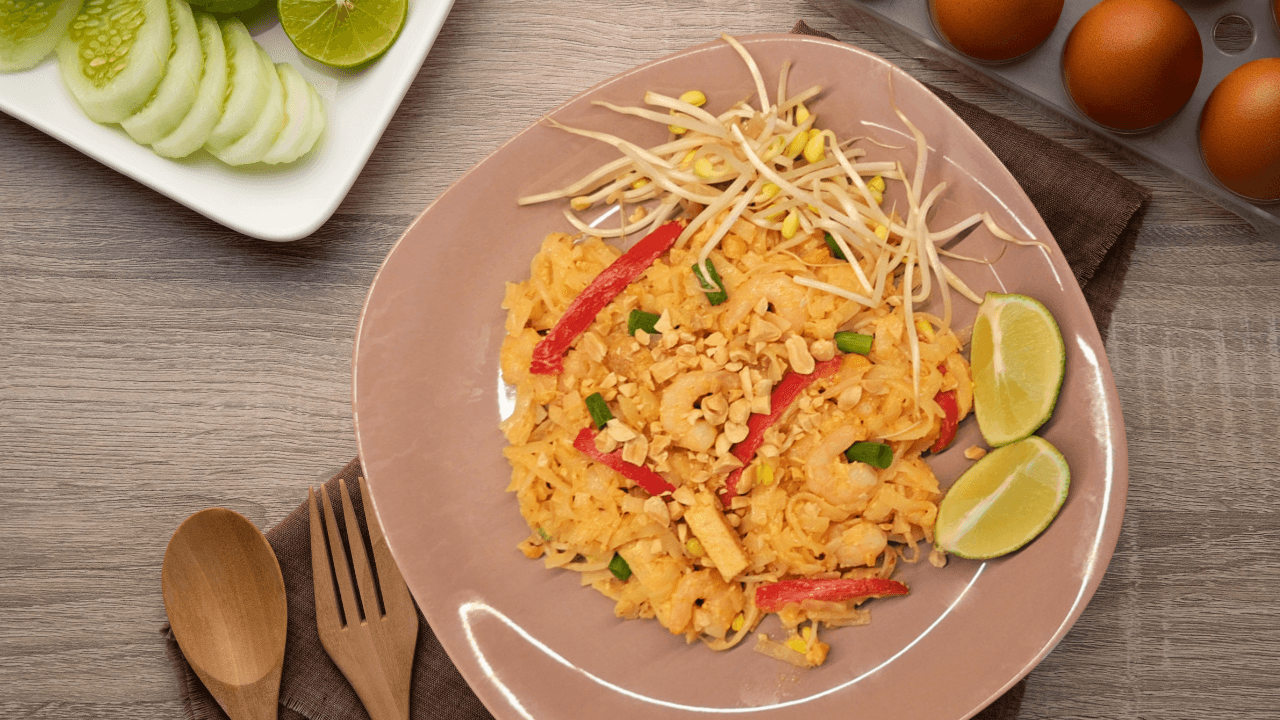
    Pad Thai is a Thai stir-fried noodle dish made with rice noodles, shrimp, tofu, eggs, bean sprouts and peanuts, all coated in a sweet, sour and savory tamarind-based sauce. Lime and chili are often added at the table for extra brightness and heat.

    What is Pad Thai?

    Pad Thai is a Thai stir-fried noodle dish made with flat rice noodles and a sauce built around tamarind, fish sauce and sugar. It commonly includes ingredients such as egg, tofu, bean sprouts, peanuts and a protein such as shrimp or chicken.

    The noodles are stir-fried quickly over high heat so they absorb the sauce while staying tender rather than soft or mushy. The finished dish is usually served with lime, peanuts, and additional bean sprouts, allowing each person to adjust the flavor and texture at the table.

    Pad Thai in Thai food culture

    Pad Thai is one of Thailand’s best-known noodle dishes and is widely associated with the country’s street-food culture. It is commonly cooked quickly to order in a wok, with the noodles, sauce, egg, tofu and other ingredients tossed together over high heat.

    Part of the appeal of Pad Thai is the balance of flavors and textures in a single dish: sour tamarind, salty fish sauce, sweetness, tender noodles, crunchy peanuts and fresh bean sprouts. Lime wedges and chili are often served alongside so diners can adjust the acidity and heat to their own taste.

    What does Pad Thai taste like?

    Pad Thai is sweet, sour, salty and savory, with tamarind providing its characteristic tang, fish sauce adding depth and brown sugar rounding out the sauce. The rice noodles absorb these flavors while remaining soft and slightly chewy.

    Shrimp, egg and tofu add richness, while bean sprouts and peanuts bring freshness and crunch. A squeeze of lime brightens the dish, and chili flakes can add as much heat as you like.

    How Pad Thai varies

    Pad Thai varies widely depending on the cook, region and ingredients available. Common proteins include shrimp, chicken and tofu, while some versions add extra vegetables or leave out certain components entirely.

    The balance of tamarind, fish sauce and sugar also changes from recipe to recipe, creating versions that are more tangy, savory or sweet. Garnishes can vary as well, but peanuts, bean sprouts, lime and chili are among the most common finishing touches.

    Where does Pad Thai come from?

    Pad Thai developed in Thailand from a broader tradition of stir-fried rice noodle dishes influenced by Chinese cooking techniques. Its modern form became especially prominent during the 20th century, when the Thai government promoted it as part of a wider effort to encourage a shared national food identity.

    The dish went on to become one of Thailand’s most recognizable foods, both at home and internationally. Although its exact origins are more complex than a single invention story, Pad Thai is now firmly associated with Thai street food and everyday cooking.

    Make Pad Thai at home

    Ready to make it yourself? Follow the full Pad Thai recipe with ingredients, step-by-step instructions, recipe notes and video.
  • Homemade Ramen

    Homemade Ramen

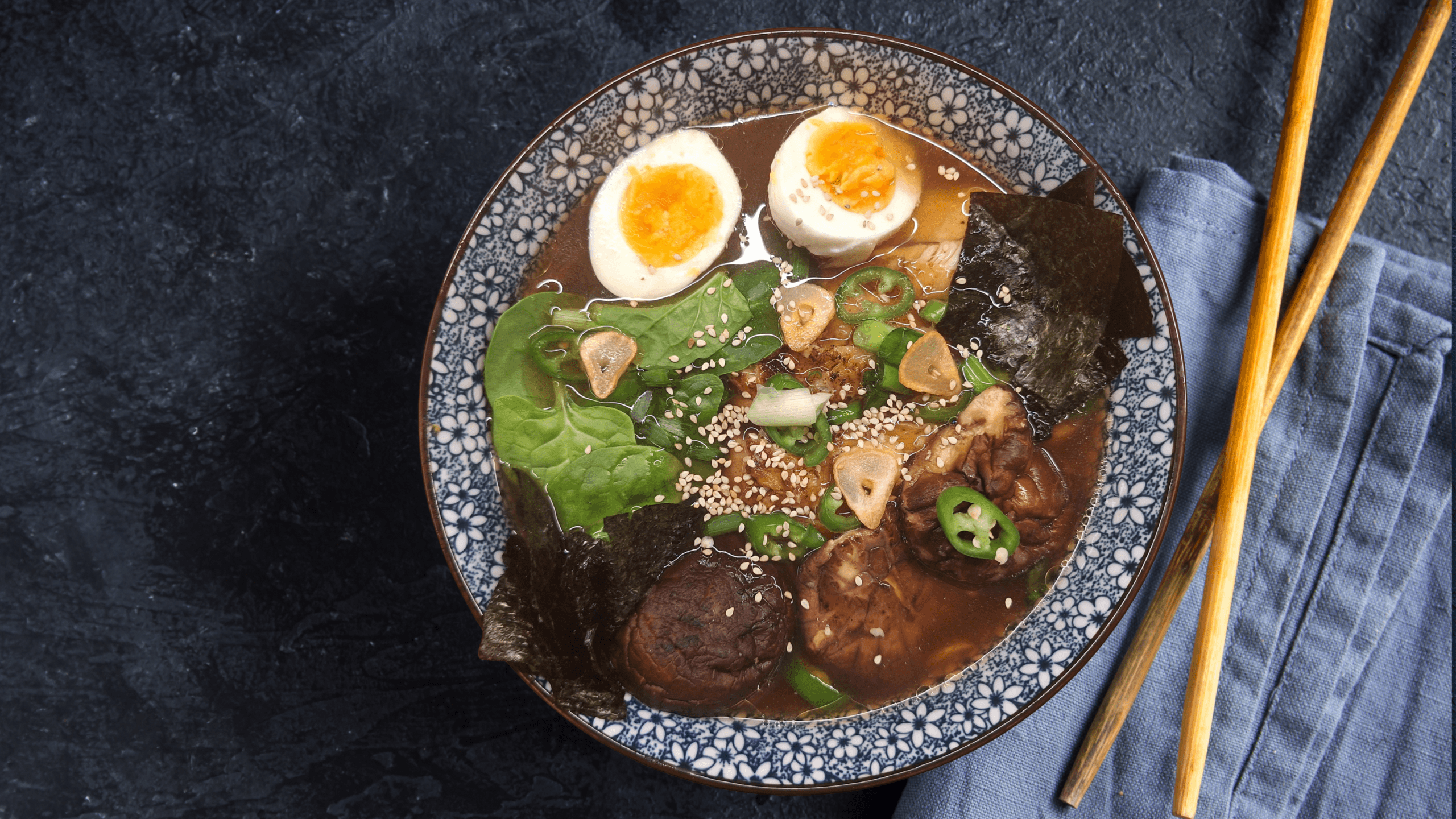
    Homemade Ramen is a Japanese noodle soup built around a deeply flavored broth, springy noodles, and a variety of toppings. This version combines chicken stock and dashi with soy sauce, then adds sliced chicken, shiitake mushrooms, soft-boiled eggs, baby spinach, green onions, nori, and crispy garlic.

    What is Homemade Ramen?

    Homemade Ramen is a Japanese noodle soup made by combining a flavorful broth with ramen noodles and a variety of toppings. In this version, the broth is built from both chicken stock and dashi, then seasoned with soy sauce, rice vinegar, sugar, and salt.

    The bowl is finished with sliced chicken, shiitake mushrooms, soft-boiled eggs, baby spinach, green onions, fried garlic, nori, sesame seeds, and optional chili oil. The result is a layered soup with savory depth from the chicken and dashi, balanced by fresh and aromatic toppings.

    Homemade Ramen in Japanese food culture

    Ramen is one of Japan’s most recognizable comfort foods, with countless regional styles built around different broths, seasonings, noodles, and toppings. It is commonly served in dedicated ramen shops, where each bowl is often defined by the character of its broth and the way it is seasoned.

    Making ramen at home usually means breaking the dish into separate components: broth, seasoning, noodles, protein, and toppings. This version follows that approach by combining homemade chicken stock with dashi, then finishing the bowl with chicken, eggs, mushrooms, greens, and aromatic garnishes.

    What does Homemade Ramen taste like?

    Homemade Ramen is deeply savory and aromatic, with the chicken stock providing body and richness while the dashi adds a lighter layer of umami from kombu and bonito. Soy sauce brings saltiness and depth, while a small amount of rice vinegar and sugar helps round out the broth.

    The toppings add contrast: tender chicken, earthy shiitake mushrooms, creamy soft-boiled eggs, fresh baby spinach, crisp green onions, nori, sesame seeds, and fried garlic. Optional chili oil adds heat and another layer of richness.

    How Homemade Ramen varies

    Ramen varies widely depending on the broth, seasoning, noodles, and toppings. Common styles include soy sauce-based shoyu ramen, miso ramen, salt-seasoned shio ramen, and rich tonkotsu ramen made with pork bones.

    Homemade versions can also be adapted with different proteins, vegetables, mushrooms, eggs, and garnishes. This version combines chicken stock with dashi and soy sauce, then uses chicken, shiitake mushrooms, baby spinach, soft-boiled eggs, nori, green onions, and fried garlic as the main toppings.

    Where does Homemade Ramen come from?

    Ramen developed in Japan from Chinese-style wheat noodle soups that became increasingly popular in the late 19th and early 20th centuries. Over time, Japanese cooks adapted the dish with local broths, seasonings, noodles, and toppings, creating the many regional styles associated with ramen today.

    As ramen spread across Japan, different areas developed their own characteristic versions, ranging from light soy-based broths to rich pork-bone soups. Homemade ramen follows the same basic idea of combining noodles, a seasoned broth, and carefully chosen toppings, while allowing the cook to adapt each component to taste.

    Make Homemade Ramen at home

    Ready to make it yourself? Follow the full Homemade Ramen recipe with ingredients, step-by-step instructions, recipe notes and video.

  • Pad Thai

    Pad Thai

    This Pad Thai recipe combines rice noodles with shrimp, tofu, egg, bean sprouts and peanuts in a sweet, sour and savory tamarind sauce. The noodles are stir-fried quickly over high heat, then finished with lime, extra peanuts and fresh bean sprouts for a bright, crunchy finish.

    Watch how to make Pad Thai

    Ingredients

    Noodles

    • 200 g flat rice noodles

    For the sauce

    • 6 tbsp tamarind paste, not concentrate
    • 6 tbsp packed brown sugar
    • 6 tbsp fish sauce
    • 9 tbsp water

    For the stir-fry

    • 2 tbsp vegetable or canola oil, plus a little extra if needed
    • 1 small onion, chopped
    • 2 garlic cloves, finely chopped
    • 200 g medium shrimp, peeled and deveined
    • 85 g firm tofu, patted dry and cut into batons
    • ½ red bell pepper, thinly sliced
    • 2 eggs, lightly beaten
    • 100 g bean sprouts, plus a little extra for serving
    • 1 green onion, cut into short lengths
    • ½ cup finely chopped roasted peanuts, divided
    • Dried chili flakes, to taste, optional

    For serving

    • Lime wedges
    • Extra bean sprouts

    Instructions

    Prepare the noodles

    Place the rice noodles in a large bowl and cover with plenty of boiling water.

    Leave them to soak for about 3 minutes, then drain and rinse briefly under cold water.

    Do not soak them for too long, or they may become too soft. Depending on the brand and thickness of the noodles, the soaking time may vary slightly.

    Use kitchen scissors to cut through the drained noodles once or twice so they are easier to toss and separate in the pan.

    Make the sauce

    In a small bowl, stir together the tamarind paste, brown sugar, fish sauce, and water.

    Set aside.

    Cook the shrimp

    Heat a wok or large nonstick skillet over high heat.

    Add just enough oil to lightly coat the base of the pan.

    Add the shrimp and cook for about 1 to 2 minutes per side, or until pink and just cooked through.

    Remove the shrimp from the pan and set aside.

    Stir-fry the vegetables and tofu

    Add a little more oil if needed, then add the onion.

    Cook for about 30 seconds, then add the red bell pepper, tofu, garlic, and chili flakes if using.

    Stir-fry for a few minutes, until the garlic is fragrant and the onion has softened.

    If the pan looks dry, add a little more oil to help keep the noodles from sticking together.

    Add the noodles and eggs

    Add the noodles and pour in the sauce.

    Toss everything together until the noodles absorb the sauce.

    Once most of the sauce has been absorbed, check the noodles. If they are still a little firm, add a small splash of water and continue cooking briefly.

    Add the water a little at a time so the noodles do not become soggy.

    Push the noodles to one side of the pan.

    Add a small drizzle of oil to the empty side, then pour in the beaten eggs.

    Let the eggs set for a few seconds, then gently break them up and fold them into the noodles.

    Finish and serve

    Return the shrimp to the pan along with any juices.

    Add the bean sprouts, green onion, and half of the chopped peanuts.

    Turn off the heat and toss everything together until well combined.

    Serve immediately with the remaining peanuts sprinkled over the top, lime wedges on the side, and extra bean sprouts if desired.

    Squeeze fresh lime juice over the Pad Thai just before eating.

    Recipe Notes

    Use tamarind paste, not concentrate

    This recipe is written for tamarind paste rather than concentrated tamarind. Concentrate can be much stronger, so using the same quantity could make the sauce overly sour.

    Do not oversoak the noodles

    The rice noodles only need a short soak before stir-frying. They should still have some firmness when drained because they will continue cooking in the pan with the sauce. Different brands and noodle thicknesses may require slightly different soaking times.

    Add water gradually if needed

    If the noodles are still too firm after absorbing most of the sauce, add only a small splash of water at a time. Too much liquid can quickly make the noodles soft or soggy.

    Keep the pan hot

    Pad Thai cooks quickly, so have the ingredients prepared before you start stir-frying. A hot wok or skillet helps the ingredients cook rapidly without sitting in the pan for too long.

    Do not overcook the shrimp

    Cook the shrimp only until pink and just cooked through, then remove them from the pan. Returning them near the end keeps them tender instead of rubbery.

    Adjust the heat at the table

    The chili flakes are optional, so you can keep the Pad Thai mild and let each person add extra chili and lime to taste when serving.

    Learn more about Pad Thai

    Want to learn more about the dish, its flavors, variations and place in Thai food culture? Read our guide to Pad Thai.

  • Homemade Ramen

    Homemade Ramen

    This Homemade Ramen recipe combines a rich chicken stock with dashi, soy sauce and simple seasonings, then builds each bowl with ramen noodles, sliced chicken, shiitake mushrooms, soft-boiled eggs, baby spinach, green onions, nori, sesame seeds and crispy garlic. It takes time, but most of the work is in preparing the broth and toppings separately.

    Watch how to make Homemade Ramen

    Ingredients

    For the chicken stock

    • 7 cups water
    • 4 chicken wings, or bones and leftovers from deboning the thighs
    • 1 thumb-sized piece fresh ginger (about 20 g), sliced
    • 1 onion
    • 1 garlic clove

    For the dashi

    • 5 cups water
    • 10 g kombu (dried kelp)
    • 25 g katsuobushi (dried bonito flakes)

    For the seasoned broth

    • Chicken stock, prepared above
    • Dashi, prepared above
    • 4 tbsp soy sauce
    • 2 tsp rice vinegar
    • 2 tsp sugar
    • 1–1½ tsp salt, or to taste

    For the noodles and toppings

    • 4 packs ramen noodles, about 150 g (5 oz) each
    • 2 boneless, skin-on chicken thighs
    • 30 g (1 oz) dried shiitake mushrooms
    • 2 eggs
    • 1 small bunch baby spinach
    • 2 green onions, thinly sliced
    • 2 garlic cloves, thinly sliced
    • 1 sheet nori, cut into small squares
    • Sesame seeds, for garnish
    • Kosher salt and freshly ground black pepper, for seasoning the chicken
    • 1 tbsp butter
    • Neutral oil, as needed, for frying the garlic
    • Chili oil, optional, for serving

    Instructions

    Make the chicken stock

    Add the water, chicken wings or bones, ginger, onion, and garlic to a large stockpot.

    Bring to a boil, then reduce the heat and simmer for at least 2 hours, or up to 6 hours if time allows.

    Strain the stock, discard the solids, and set the stock aside.

    The chicken stock can be prepared 1 day ahead and refrigerated until needed.

    Make the dashi

    Combine the water and kombu in a large pot and heat over medium-low heat for 20 to 30 minutes. Do not let the liquid boil.

    Remove the kombu.

    Increase the heat and bring the liquid just to a boil. Add the katsuobushi, let it sink, and simmer for 30 seconds.

    Turn off the heat and let it steep for 10 minutes.

    Strain through a cheesecloth-lined fine strainer, or a fine strainer lined with paper towel, into a large bowl.

    Season the broth

    Return the dashi to the pot over medium heat.

    Add the chicken stock, soy sauce, rice vinegar, sugar, and salt.

    Taste and adjust the salt if needed.

    Keep the broth hot over low heat while you prepare the toppings and noodles.

    Prepare the chicken

    Preheat the oven to 375°F / 190°C.

    Season the chicken thighs generously with kosher salt and freshly ground black pepper.

    Melt the butter in a large oven-safe skillet over medium heat.

    Add the chicken skin-side down and cook for 5 to 7 minutes, until the skin is golden brown and releases easily from the pan.

    Flip and cook for another 4 to 5 minutes.

    Transfer the skillet to the oven and roast for 15 to 20 minutes, or until the chicken is cooked through.

    Transfer the chicken to a plate, cover loosely with foil, and let it rest before slicing thinly.

    Prepare the eggs and mushrooms

    Bring a pot of water to a boil.

    Gently lower in the eggs straight from the refrigerator and simmer for 7 minutes for slightly runny yolks, or 8 minutes for soft but set yolks.

    Transfer the eggs immediately to a bowl of ice water and cool for at least 5 minutes.

    Peel carefully and cut in half lengthwise.

    Meanwhile, place the dried shiitake mushrooms in a bowl and cover with hot water.

    Soak for 20 to 30 minutes, or until softened. Squeeze out the excess water and slice thinly.

    Prepare the spinach and fried garlic

    Wash the baby spinach and set it aside. It only needs to wilt briefly from the heat of the broth when the bowls are assembled.

    Heat a little neutral oil in a small skillet over medium-low heat.

    Add the thinly sliced garlic and cook for 2 to 3 minutes, until golden and lightly crisp.

    Remove the garlic from the oil and set aside.

    Cook the noodles

    Cook the ramen noodles according to the package instructions, usually 1 to 3 minutes depending on their thickness.

    Slightly undercook them so they do not become soggy once the hot broth is added.

    Drain well.

    Assemble and serve

    Divide the noodles among 4 bowls.

    Pour the hot broth over the noodles.

    Top each bowl with sliced chicken, shiitake mushrooms, soft-boiled egg, baby spinach, green onions, fried garlic, nori, and sesame seeds.

    Finish with a little chili oil if desired and serve immediately.

    Recipe Notes

    Make the chicken stock ahead

    The chicken stock can be prepared 1 day in advance and refrigerated until needed. This makes the final ramen much easier to assemble.

    Do not boil the kombu

    Keep the dashi below a boil while the kombu is steeping. Remove the kombu before bringing the liquid up to a boil and adding the katsuobushi.

    Slightly undercook the noodles

    Ramen noodles continue softening once the hot broth is added. Cook them just shy of fully done so they stay springy in the bowl.

    Keep the eggs soft

    For a slightly runny yolk, cook the eggs for about 7 minutes. For a soft but more set center, cook for about 8 minutes, then transfer them immediately to ice water.

    Add the spinach at the end

    Because baby spinach wilts very quickly, there is no need to cook it separately. Add it directly to the bowls and let the hot broth soften it.

    Fry the garlic gently

    Cook the sliced garlic over medium-low heat and watch it closely. It can go from golden to burnt very quickly, and burnt garlic will taste bitter.

    Adjust the broth before serving

    Taste the seasoned broth before assembling the bowls and adjust the salt if needed. The soy sauce already adds saltiness, so make the final adjustment carefully.

    Learn more about Homemade Ramen

    Want to learn more about the dish, its flavors, variations and place in Japanese food culture? Read our guide to Homemade Ramen.