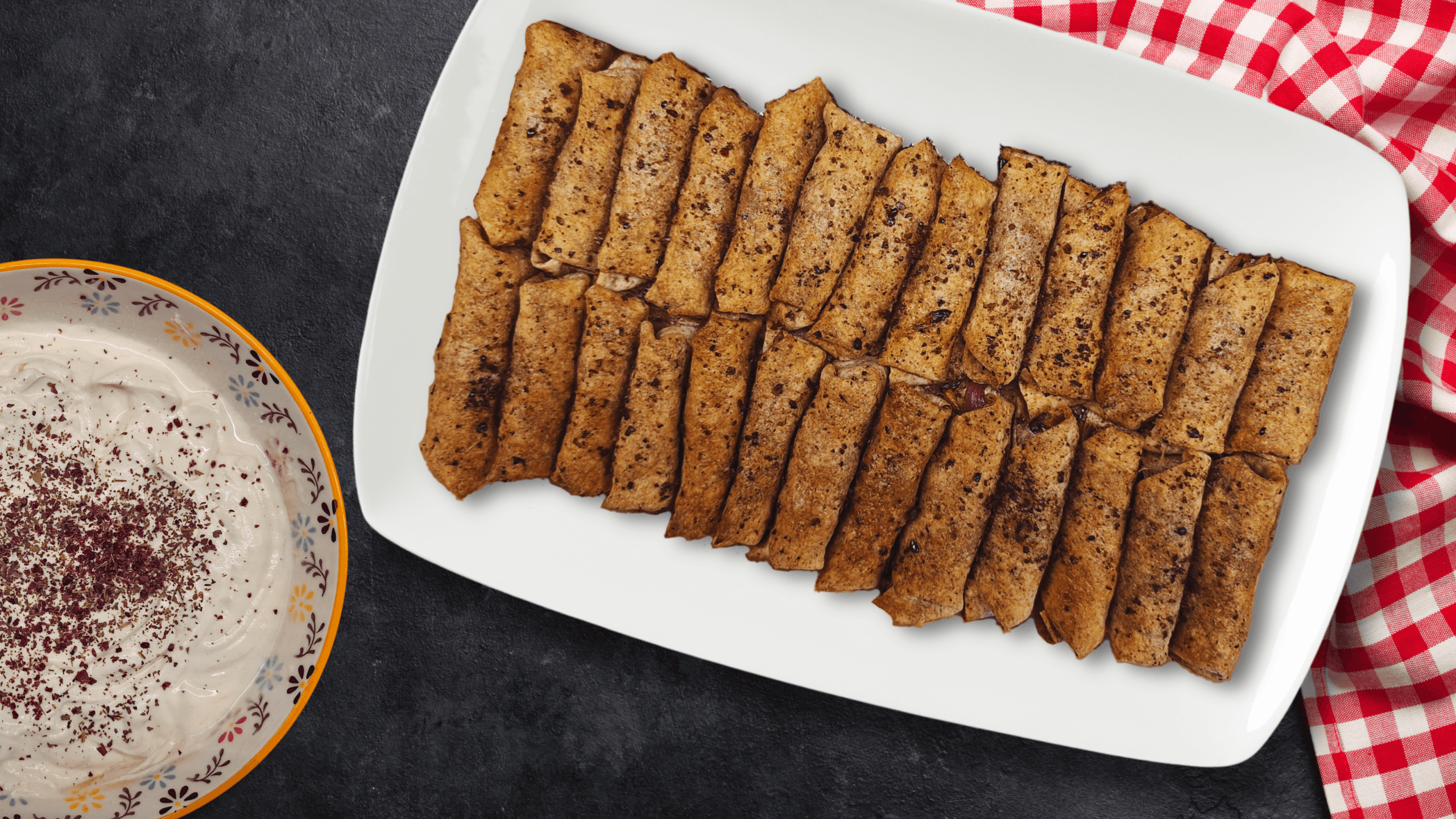
Musakhan is a traditional Palestinian dish of roasted chicken served over taboon bread soaked with olive oil and topped with onions cooked with sumac. Rich, tangy and deeply savory, it is often finished with toasted pine nuts and is known for the way the bread absorbs the juices, olive oil and spices from the chicken and onions.
What is Musakhan?
Musakhan is built by layering several simple components rather than cooking everything together in one pot. Taboon bread forms the base, followed by onions softened in generous amounts of olive oil and seasoned heavily with sumac, then roasted chicken placed on top.
As the dish is assembled, the bread absorbs the olive oil, onion juices and chicken drippings, becoming soft and richly flavored while still retaining some structure. The contrast between the tangy onions, savory chicken and oil-soaked bread is central to the dish.
Musakhan in Palestinian food culture
Musakhan is closely associated with Palestinian home cooking and communal meals, especially when prepared for family gatherings and shared directly from large platters. Its ingredients reflect some of the most characteristic flavors of Palestinian cooking: olive oil, sumac, bread, onions and roasted chicken.
The dish is particularly tied to the olive harvest season, when freshly pressed olive oil is traditionally celebrated in Palestinian households. Because olive oil is such a central ingredient in Musakhan, the dish is often seen as an expression of both Palestinian agriculture and hospitality.
What does Musakhan taste like?
Musakhan is rich and savory, with a pronounced tanginess from sumac cutting through the olive oil and roasted chicken. The onions become soft and sweet as they cook, balancing the sumac’s tart, slightly fruity character.
The bread is just as important to the experience as the chicken. It absorbs olive oil, onion juices and roasting drippings, giving each bite a soft, deeply seasoned base, while toasted pine nuts add a contrasting crunch when used as a garnish.
Where does Musakhan come from?
The bread is just as important to the experience as the chicken. It absorbs olive oil, onion juices and roasting drippings, giving each bite a soft, deeply seasoned base, while toasted pine nuts add a contrasting crunch when used as a garnish.
The bread is just as important to the experience as the chicken. It absorbs olive oil, onion juices and roasting drippings, giving each bite a soft, deeply seasoned base, while toasted pine nuts add a contrasting crunch when used as a garnish.
How Musakhan varies
Traditional Musakhan is usually served as whole pieces of chicken arranged over large rounds of bread with sumac onions and olive oil. The exact balance of sumac, onion and oil can vary from one household to another, and toppings such as pine nuts or almonds may also differ.
A more modern variation is Musakhan rolls, in which the chicken and onion mixture is wrapped inside smaller pieces of flatbread and baked or toasted. The flavors are similar, but the rolled version is easier to serve as an appetizer or individual portion and should be considered a variation rather than the classic presentation.
Make Musakhan at home
Ready to make it yourself? Follow the full Musakhan recipe with ingredients, step-by-step instructions, recipe notes and video.