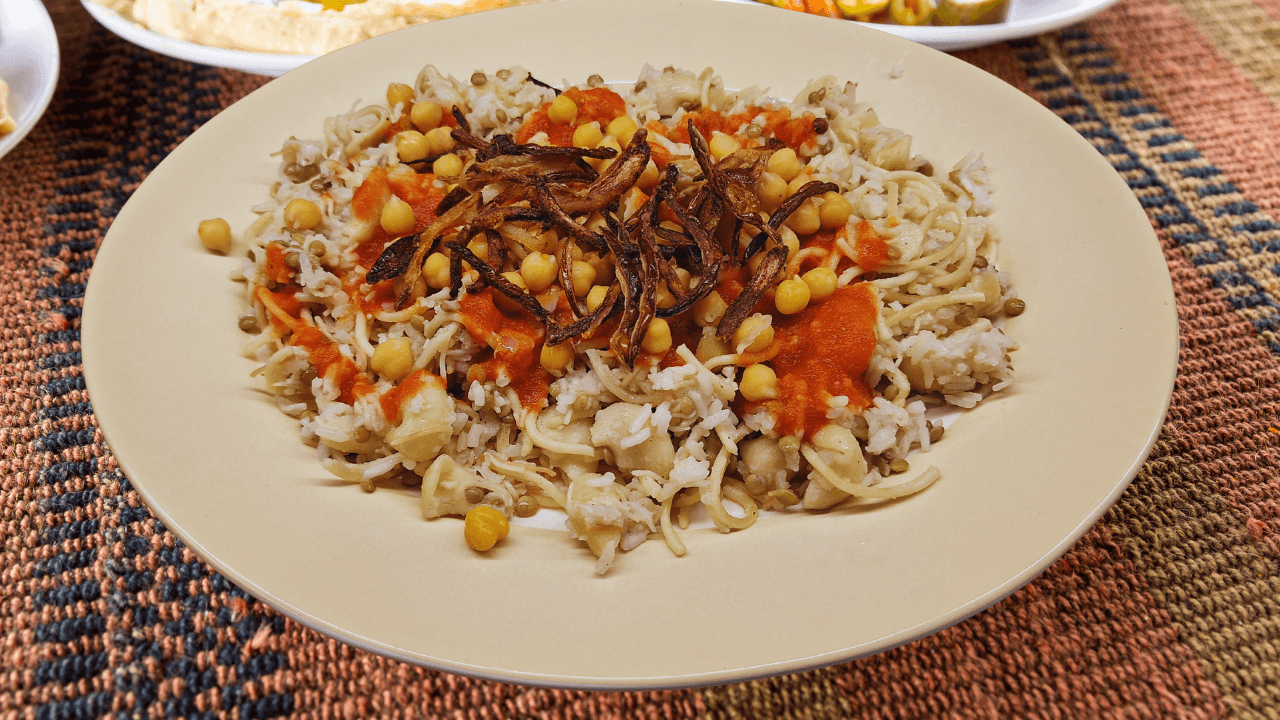
Koshary is one of Egypt’s most distinctive everyday dishes: a hearty combination of rice, lentils, pasta and chickpeas topped with spiced tomato sauce, garlic-vinegar sauce and crisp fried onions. Cheap, filling and deeply associated with Egyptian street food, it brings together simple ingredients into a dish with layers of texture, acidity, spice and crunch.
What is Koshary?
Rather than being cooked as a single combined dish, Koshary is assembled from separately prepared components and finished just before serving. The base is layered into the bowl, then the sauces and fried onions are added on top. This makes the final balance easy to adjust, and diners can add more tomato sauce, garlic-vinegar dressing or heat according to their preference.
It is widely eaten as an inexpensive, filling meal and is especially associated with Egypt’s casual restaurants and street-food culture. Koshary shops range from small neighborhood counters to large specialist restaurants devoted almost entirely to the dish.
Why Koshary matters in Egypt?
Koshary occupies an unusual place in Egyptian food culture because it is both intensely ordinary and instantly recognizable. It is inexpensive enough to be an everyday meal, substantial enough to satisfy on its own, and familiar across different parts of Egyptian society. For many people, it is less a special-occasion food than something woven into daily life.
The specialist Koshary shop is also part of the experience. Ingredients are prepared in quantity, assembled quickly and served with the sauces and condiments that allow each diner to adjust the final dish. That combination of affordability, speed and familiarity has helped make Koshary one of the foods most strongly associated with modern Egyptian eating.
History and origins of Koshary
The exact origins of Koshary are debated. One of the earliest known written descriptions comes from the nineteenth century, when the British explorer Richard Burton wrote of a dish eaten in Suez made from rice, lentils and onions. That early version was much simpler than the Koshary served in Egypt today.
Over time, the dish evolved as new ingredients and influences became part of Egyptian cooking. Pasta, chickpeas, tomato sauce, garlic-vinegar dressing and crisp onions were gradually incorporated, creating the layered form now associated with modern Koshary. Although comparisons are often made with Indian khichdi and other rice-and-lentil dishes, historians do not agree on a single foreign origin for Koshary.
The sauces and toppings that define Koshary
Koshary depends heavily on what goes on top of the rice, lentils and pasta. A rich tomato sauce provides much of the dish’s flavor, while a sharp garlic-and-vinegar sauce—often known as daqqa or dakka—adds acidity that cuts through the starchier ingredients. A hot chili sauce, commonly called shatta, can be added for extra heat.
Crisp fried onions provide the final contrast, adding sweetness, texture and crunch. The balance of tomato sauce, vinegar, garlic and chili can be adjusted at the table, which means two bowls built from the same basic ingredients can taste noticeably different depending on how each person seasons them.
What does Koshary taste like?
Koshary is hearty and savory, but the finished dish is more lively than its base ingredients might suggest. Rice, lentils and pasta create a mild, comforting foundation, while tomato sauce adds richness and a gentle tang. The garlic-vinegar dressing brings sharpness and acidity, and chili sauce can add anything from a little warmth to noticeable heat.
Texture is just as important as flavor. The soft grains, lentils and pasta contrast with firm chickpeas and crisp fried onions, so a good bowl combines softness, crunch, acidity and spice in almost every bite.
Cook Koshary at home
Ready to make it yourself? Follow the full Koshary recipe with ingredients, step-by-step instructions and video.