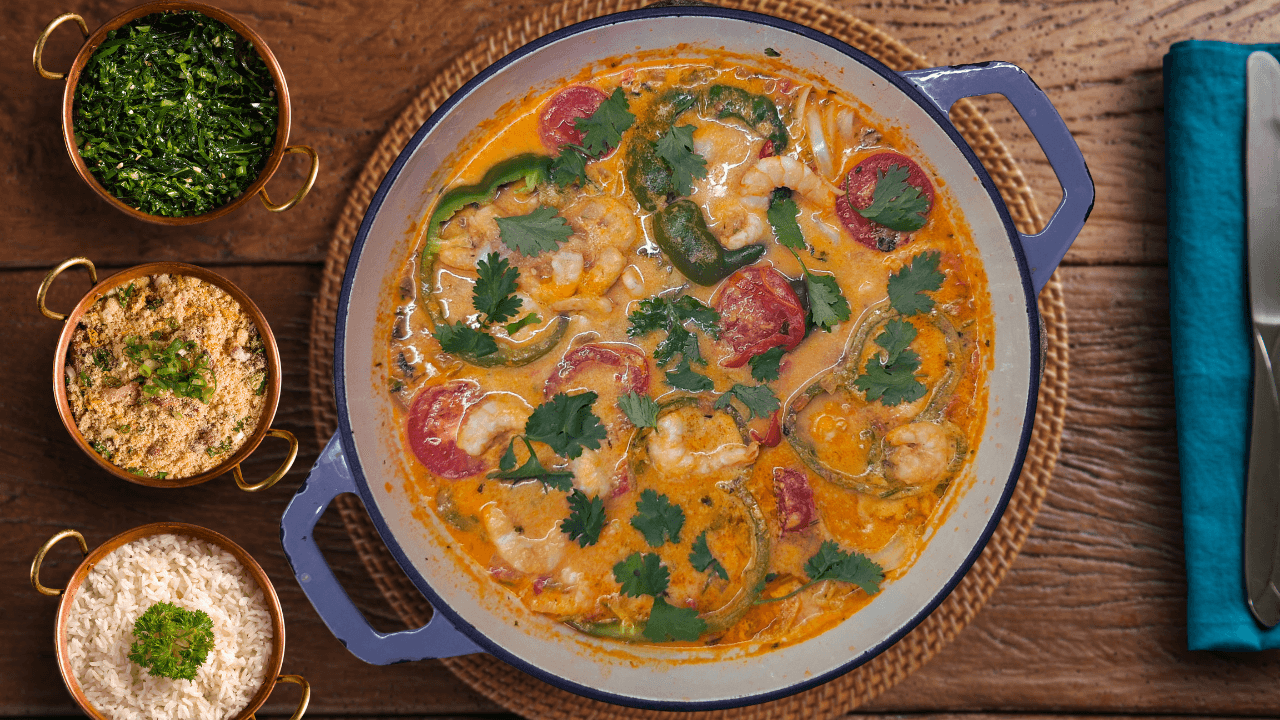
Moqueca is a Brazilian seafood stew with tender fish and shrimp simmered in a rich sauce of coconut milk, tomatoes, peppers, onions, cilantro and palm oil. Fragrant, colorful and deeply satisfying, it combines the richness of coconut with fresh herbs, gentle acidity and the distinctive flavor of palm oil.
What is Moqueca?
Moqueca is a Brazilian seafood stew in which fish is gently cooked in a flavorful sauce built from tomatoes, onions, peppers and fresh herbs. In this version, firm white fish and shrimp are combined with coconut milk and palm oil, creating a rich sauce while allowing the seafood to remain the focus of the dish.
The fish is first coated in an aromatic marinade of onion, garlic, cilantro, lemon, ginger, chili and tomato paste. The stew base is then cooked slowly until the vegetables soften and concentrate before the coconut milk and seafood are added toward the end of cooking.
Moqueca in Brazilian food culture
Moqueca is closely associated with Brazil’s coastal food traditions, particularly in the states of Bahia and Espírito Santo. Both regions have distinctive versions of the dish, reflecting different local ingredients and culinary traditions.
The use of coconut milk and palm oil is especially characteristic of moqueca baiana, the Bahian style represented by this version. In Espírito Santo, moqueca capixaba is traditionally prepared without coconut milk or palm oil and is strongly associated with the region’s handmade clay cooking pots.
What does Moqueca taste like?
Moqueca is rich, aromatic and gently tangy, with the sweetness of coconut milk balanced by tomatoes, lemon, fresh herbs and chili. The fish and shrimp remain delicate and juicy while absorbing the flavors of the surrounding sauce.
Palm oil gives this version its distinctive depth and character, while cilantro, peppers, ginger and garlic keep the stew fresh and fragrant. The result is creamy without feeling heavy, with layers of savory, bright and slightly spicy flavor.
How Moqueca varies
Moqueca varies considerably across Brazil, with the best-known regional distinction between Bahian and Capixaba styles. Moqueca baiana typically includes coconut milk and azeite de dendê, or palm oil, giving it a richer texture and distinctive flavor. Moqueca capixaba, associated with Espírito Santo, traditionally omits both coconut milk and palm oil, instead using ingredients such as olive oil and urucum and cooking the dish in a traditional clay pot.
The seafood can also vary widely. Moqueca may be made with different firm fish, shrimp, octopus or combinations of seafood, while some versions use ingredients such as banana-da-terra or even plant-based alternatives. This mixed fish-and-shrimp version follows the richer Bahian style through its use of coconut milk and palm oil.
Where does Moqueca come from?
The precise origin of Moqueca is difficult to reduce to a single place or moment. Its foundations are closely connected with Indigenous cooking traditions along Brazil’s coast, particularly the preparation of fish and seafood. Over time, those traditions developed through the cultural exchanges that shaped Brazilian cuisine, including Indigenous, African and European influences.
In Bahia, African culinary influences helped shape the distinctive style now known as moqueca baiana, particularly through ingredients such as coconut milk and azeite de dendê. In Espírito Santo, a different regional tradition developed around moqueca capixaba, prepared without coconut milk or palm oil and strongly associated with handmade clay pots of Indigenous origin. Together, these traditions show how Moqueca became not one fixed recipe, but a family of distinctly Brazilian seafood dishes.
Make Moqueca at home
Ready to make it yourself? Follow the full Moqueca recipe with ingredients, step-by-step instructions, recipe notes and video.