Brazilian

  • Moqueca

    Moqueca

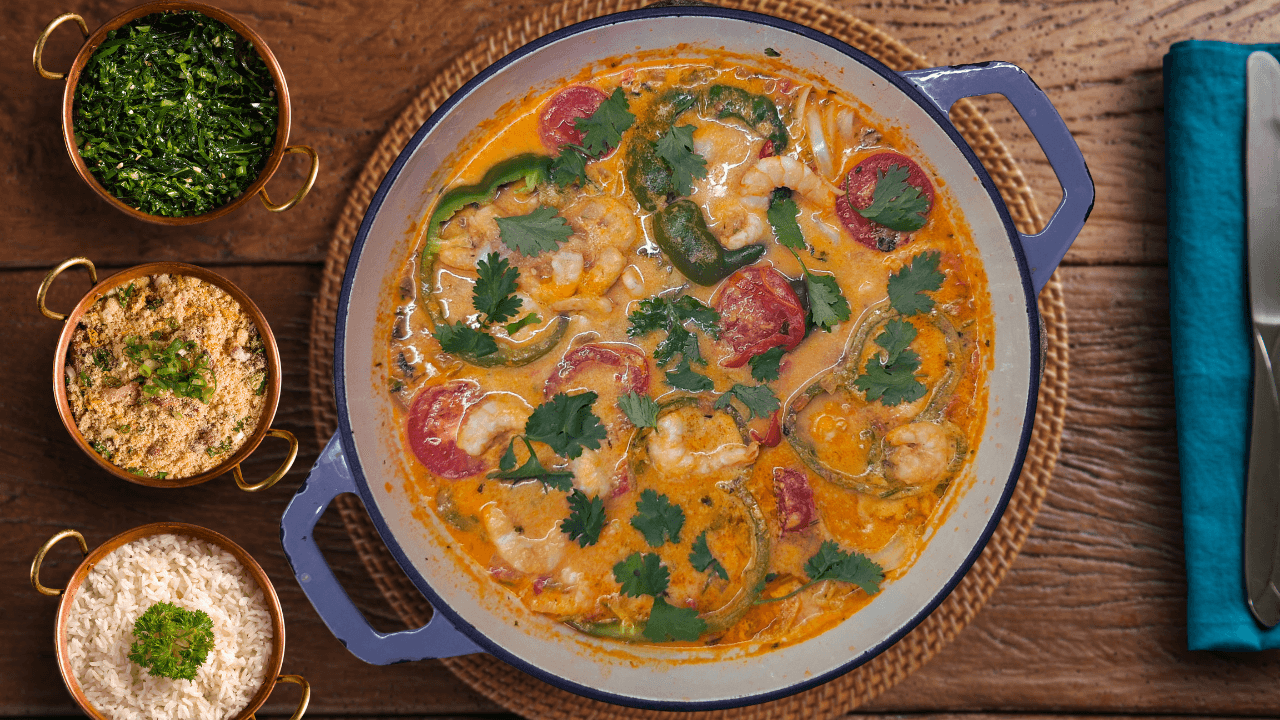
    Moqueca is a Brazilian seafood stew with tender fish and shrimp simmered in a rich sauce of coconut milk, tomatoes, peppers, onions, cilantro and palm oil. Fragrant, colorful and deeply satisfying, it combines the richness of coconut with fresh herbs, gentle acidity and the distinctive flavor of palm oil.

    What is Moqueca?

    Moqueca is a Brazilian seafood stew in which fish is gently cooked in a flavorful sauce built from tomatoes, onions, peppers and fresh herbs. In this version, firm white fish and shrimp are combined with coconut milk and palm oil, creating a rich sauce while allowing the seafood to remain the focus of the dish.

    The fish is first coated in an aromatic marinade of onion, garlic, cilantro, lemon, ginger, chili and tomato paste. The stew base is then cooked slowly until the vegetables soften and concentrate before the coconut milk and seafood are added toward the end of cooking.

    Moqueca in Brazilian food culture

    Moqueca is closely associated with Brazil’s coastal food traditions, particularly in the states of Bahia and Espírito Santo. Both regions have distinctive versions of the dish, reflecting different local ingredients and culinary traditions.

    The use of coconut milk and palm oil is especially characteristic of moqueca baiana, the Bahian style represented by this version. In Espírito Santo, moqueca capixaba is traditionally prepared without coconut milk or palm oil and is strongly associated with the region’s handmade clay cooking pots.

    What does Moqueca taste like?

    Moqueca is rich, aromatic and gently tangy, with the sweetness of coconut milk balanced by tomatoes, lemon, fresh herbs and chili. The fish and shrimp remain delicate and juicy while absorbing the flavors of the surrounding sauce.

    Palm oil gives this version its distinctive depth and character, while cilantro, peppers, ginger and garlic keep the stew fresh and fragrant. The result is creamy without feeling heavy, with layers of savory, bright and slightly spicy flavor.

    How Moqueca varies

    Moqueca varies considerably across Brazil, with the best-known regional distinction between Bahian and Capixaba styles. Moqueca baiana typically includes coconut milk and azeite de dendê, or palm oil, giving it a richer texture and distinctive flavor. Moqueca capixaba, associated with Espírito Santo, traditionally omits both coconut milk and palm oil, instead using ingredients such as olive oil and urucum and cooking the dish in a traditional clay pot.

    The seafood can also vary widely. Moqueca may be made with different firm fish, shrimp, octopus or combinations of seafood, while some versions use ingredients such as banana-da-terra or even plant-based alternatives. This mixed fish-and-shrimp version follows the richer Bahian style through its use of coconut milk and palm oil.

    Where does Moqueca come from?

    The precise origin of Moqueca is difficult to reduce to a single place or moment. Its foundations are closely connected with Indigenous cooking traditions along Brazil’s coast, particularly the preparation of fish and seafood. Over time, those traditions developed through the cultural exchanges that shaped Brazilian cuisine, including Indigenous, African and European influences.

    In Bahia, African culinary influences helped shape the distinctive style now known as moqueca baiana, particularly through ingredients such as coconut milk and azeite de dendê. In Espírito Santo, a different regional tradition developed around moqueca capixaba, prepared without coconut milk or palm oil and strongly associated with handmade clay pots of Indigenous origin. Together, these traditions show how Moqueca became not one fixed recipe, but a family of distinctly Brazilian seafood dishes.

    Make Moqueca at home

    Ready to make it yourself? Follow the full Moqueca recipe with ingredients, step-by-step instructions, recipe notes and video.

  • Moqueca

    Moqueca

    This Moqueca recipe combines firm white fish and shrimp with coconut milk, tomatoes, peppers, cilantro, and palm oil in a rich, aromatic Brazilian seafood stew. The seafood is first coated in a fresh lemon, garlic, ginger, and cilantro marinade, while the vegetable base is cooked slowly before the coconut milk and seafood are added for a flavorful but gentle finish.

    Watch how to make Moqueca

    Ingredients

    For the seafood

    • 750 g (about 1 3/4 lb) firm white fish, cut into large pieces
    • 250 g (about 9 oz) shrimp, peeled and deveined

    For the marinade paste

    • 1 medium onion, roughly chopped, about 150 g (5 oz)
    • 2 garlic cloves
    • Cilantro stems from 1 bunch, about 15 g (1/2 oz)
    • 1 tsp salt, about 6 g
    • 60 ml (1/4 cup) fresh lemon juice
    • 1 small piece fresh ginger, about 1 cm thick or 10 g (1/3 oz)
    • 1 fresh chili pepper, roughly chopped
    • 1 tbsp tomato paste, about 15 g

    For the Moqueca

    • 700–750 g (about 1 1/2–1 3/4 lb) ripe tomatoes, finely diced
    • 2 medium onions, finely diced, about 300 g (10 oz)
    • 2 green bell peppers, finely diced, about 300 g (10 oz)
    • 3 garlic cloves, finely minced
    • Cilantro leaves from 1 bunch, finely chopped, about 15 g (1/2 oz), plus extra for garnish
    • 400 ml (about 13 1/2 fl oz / 1 standard can) coconut milk
    • 3 tbsp (45 ml) palm oil

    To finish

    • 1 onion, thinly sliced, about 150 g (5 oz)
    • 1 green bell pepper, thinly sliced, about 150 g (5 oz)
    • 1 tomato, sliced, about 150 g (5 oz)
    • Fresh cilantro, for garnish

    Instructions

    Make the marinade paste

    Add the roughly chopped onion, garlic, cilantro stems, salt, lemon juice, ginger, chili pepper and tomato paste to a blender or food processor. Blend into a coarse paste. If necessary, add a small splash of water to help it blend.

    Marinate the seafood

    Place the fish and shrimp in a dish. Add about half of the marinade paste and gently coat the seafood. Cover and set aside while you prepare the remaining ingredients. If marinating for longer than 30 minutes, refrigerate.

    Reserve the remaining marinade paste for the stew.

    Prepare the vegetables

    Finely dice the onions, tomatoes and green bell peppers. Mince the garlic and finely chop the cilantro leaves.

    Build the Moqueca base

    Heat the palm oil in a deep pan or wide pot over medium heat. Add the reserved marinade paste and cook for 1–2 minutes, stirring, until fragrant.

    Add the diced onions and minced garlic and cook until the onions begin to soften.

    Add the diced tomatoes and green bell peppers. Increase the heat until the mixture begins to bubble, then reduce the heat, cover and cook for 20–30 minutes, stirring occasionally, until the vegetables are very soft and the mixture has thickened.

    Add the coconut milk and fish

    Stir in the coconut milk and bring the sauce back to a gentle simmer.

    Arrange the marinated fish evenly in the sauce. Scatter the sliced onion, green bell pepper and tomato over the top.

    Cover and simmer gently for 10–15 minutes, depending on the thickness of the fish, until it is opaque and flakes easily but remains juicy.

    Add the shrimp and finish

    Add the shrimp during the final 3–5 minutes of cooking. Cook just until the shrimp turn pink and are cooked through.

    Taste and adjust the seasoning if needed.

    Garnish generously with fresh cilantro and serve hot with white rice.

    Recipe notes

    Choosing the fish

    Use a firm, meaty white fish that will hold its shape during simmering. Good options include halibut, swordfish, kingfish, marlin, stingray or monkfish.

    Palm oil

    Palm oil gives this Moqueca its distinctive flavor and character. If it is unavailable, coconut oil can be used instead, although the finished dish will taste different.

    Don’t overcook the shrimp

    Add the shrimp only during the final 3–5 minutes of cooking. They are ready as soon as they turn pink and are cooked through; leaving them in the stew too long can make them rubbery.

    Learn more about Moqueca

    Want to know more about the dish itself? Explore the history, food culture, regional variations and story behind Moqueca.