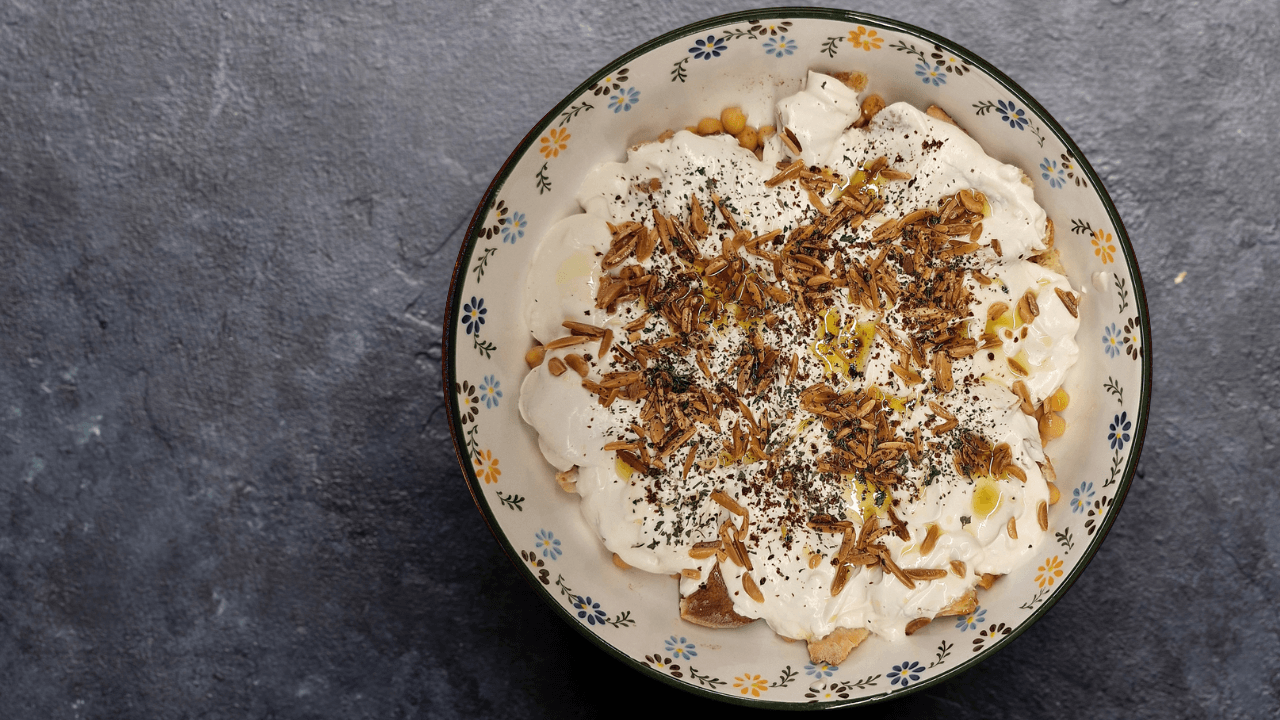
Fatteh is a comforting Levantine dish built around layers of toasted or crisp bread, chickpeas and a creamy yogurt-based sauce, often flavored with tahini, garlic and lemon. Finished with nuts and other toppings depending on the version, it combines warm, soft and crunchy textures in a dish that is especially popular for breakfast and brunch but can be eaten at other times of day as well.
What is Fatteh?
Fatteh is assembled in layers rather than cooked as a single mixture. Pieces of bread form the base, chickpeas are added while warm, and a cool, tangy yogurt sauce is spooned over the top. Nuts and other garnishes are usually added just before serving so they keep their texture.
The contrast between temperatures and textures is central to the dish: crisp or toasted bread softens slightly beneath the sauce, chickpeas add substance, and the yogurt mixture brings creaminess and acidity. Fatteh is best served soon after assembling, before the bread loses all of its crunch.
Fatteh in Lebanon and the Levant
Fatteh is closely associated with Lebanese food culture, but it is not uniquely Lebanese. Related versions are eaten across the Levant, including in Syria, Palestine and Jordan, with preparation and toppings varying from one place—and sometimes one household—to another. The shared name refers to a broader family of dishes rather than one rigidly standardized recipe.
In Lebanon, Fatteh is particularly familiar at breakfast and brunch, both at home and in restaurants, although it is not confined to the morning. It can be served as part of a larger spread or eaten as a substantial dish on its own, and different versions may appear depending on the occasion and the cook.
Different types of Fatteh
There is no single definitive version of Fatteh. Chickpeas are common, but other versions may include eggplant, meat or different combinations of toppings and sauces. The bread itself can also vary in how it is prepared, from toasted pieces to bread fried until crisp.
What connects these variations is the basic idea of layering bread with other ingredients and serving the components together so that contrasting textures remain part of the experience. This flexibility is one reason the name Fatteh can describe noticeably different dishes across the region.
What does Fatteh taste like?
Fatteh is creamy, tangy and savory, with the yogurt, tahini, garlic and lemon providing most of the dish’s flavor. Chickpeas are mild and earthy, while toasted or fried bread adds a deeper, slightly nutty character beneath the sauce.
Texture is just as important as taste. The best bowls balance creamy sauce and tender chickpeas with bread that still retains some crispness, while nuts on top add another layer of crunch. Because the bread gradually absorbs the sauce after assembly, Fatteh changes noticeably the longer it sits.
Where does Fatteh come from?
Fatteh does not have a single clearly documented point of origin. The name is commonly linked to the Arabic root fatt, referring to breaking or tearing bread into pieces—a technique at the heart of the dish. Using bread in this way also made it possible to revive older bread and stretch other ingredients into a more substantial meal.
That practical idea developed into many different preparations across the Arab world. In the Levant, bread might be combined with chickpeas, eggplant, meat or other ingredients and finished with yogurt, tahini or lemon-based sauces. What began as an economical way of building a meal has also become a dish served at family gatherings, restaurants and more elaborate occasions.
Make Fatteh at home
Ready to make it yourself? Follow the full Fatteh recipe with ingredients, step-by-step instructions and video.