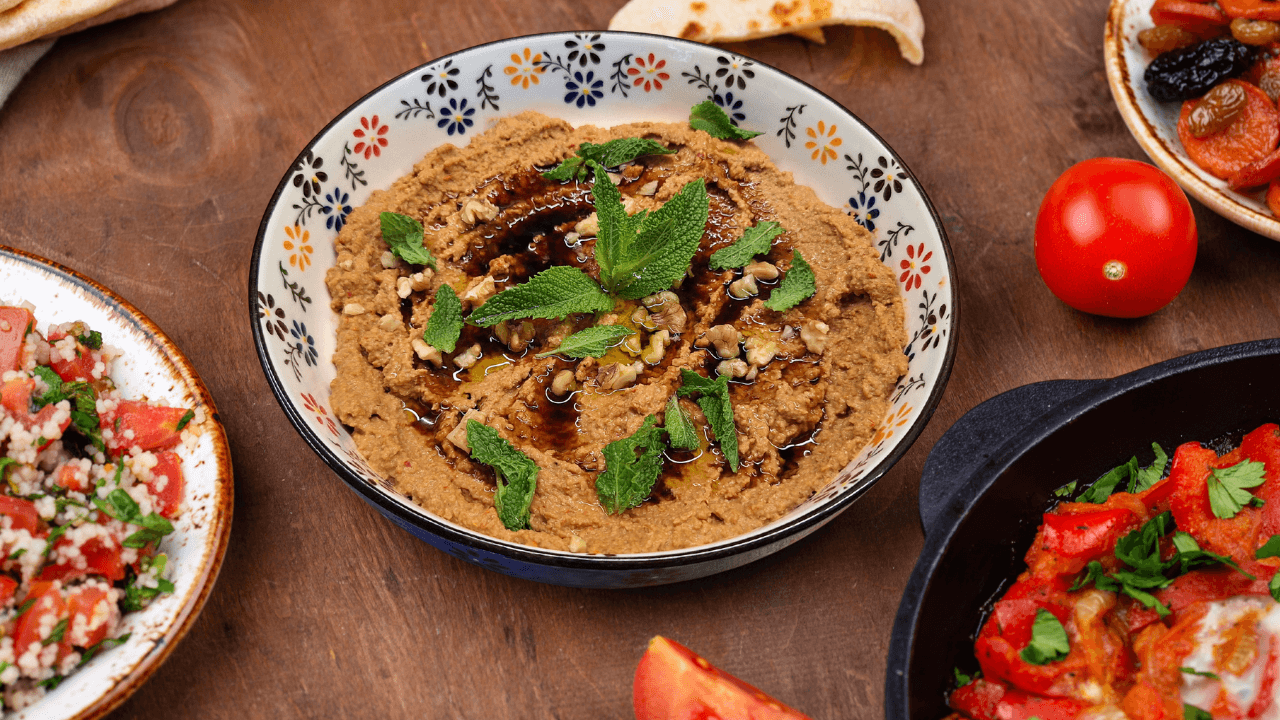
Levantine food refers broadly to the culinary traditions of the eastern Mediterranean, particularly those associated with places such as Lebanon, Palestine, Syria, and Jordan. The region shares many ingredients and techniques, including olive oil, grains, legumes, yogurt, fresh herbs, warm spices, breads, grilled meats, and an extensive tradition of small dishes served together.
There is no single Levantine cuisine, and the same dish can have different names, ingredients, preparations, and cultural associations across the region. This guide is an introduction to some of the flavors, ingredients, and dishes that help make Levantine food so distinctive.
Common ingredients in Levantine food
Levantine cooking makes extensive use of vegetables, grains, legumes, olive oil, yogurt, fresh herbs, nuts, and aromatic spices. Chickpeas, lentils, bulgur, rice, eggplant, tomatoes, onions, garlic, parsley, mint, sesame, and lemon appear frequently, while ingredients such as tahini, pomegranate molasses, sumac, and za’atar add distinctive richness, acidity, and fragrance.
Bread is also central to many meals, whether used for scooping dips and salads, wrapped around fillings, or incorporated directly into dishes. Meat and fish are important too, but many well-known Levantine foods are built around grains, pulses, vegetables, and dairy rather than making meat the sole focus of the meal.
How Levantine meals come together
Levantine meals are often built around several dishes rather than a single plate. Small plates, salads, dips, breads, pickles, vegetables, and warm dishes may be served together, allowing people to combine different flavors and textures throughout the meal.
This style of eating is often associated with mezze, but Levantine food extends far beyond mezze alone. Home cooking also includes rice and grain dishes, stuffed vegetables, baked dishes, stews, grilled meats, fish, and substantial breads topped or filled with meat, onions, herbs, and spices.
Levantine dishes to know
The Levant includes many dishes that cross modern national borders, while others are especially associated with particular places and communities. Recipes and names can vary considerably, so it is more useful to think of Levantine food as a connected regional tradition rather than a single uniform cuisine.
The Nomadic Treats collection already includes several dishes that offer a useful introduction to this food culture, including Muhammara, Fatteh, Mujadara, Musakhan, and Samake Harra.
Muhammara
Muhammara is a roasted red pepper and walnut dip associated especially with Aleppo in Syria and widely enjoyed across the Levant. Its flavor is rich, slightly smoky, nutty, and tangy, with pomegranate molasses adding a characteristic sweet-sour depth.
It is commonly served with bread as part of a spread of small dishes and is a good example of the way Levantine cooking combines vegetables, nuts, spices, olive oil, and acidity to build complex flavor from relatively simple ingredients.
Learn more about Muhammara or make our Muhammara recipe.
Fatteh
Fatteh is a Levantine dish built around layers of bread and other ingredients, with many versions across the region. Depending on the preparation, it may include chickpeas, yogurt, tahini, garlic, nuts, meat, or other toppings.
What ties the different versions together is the contrast of textures: crisp or softened bread underneath creamy, savory toppings and garnishes. It is a useful example of how Levantine cooking transforms everyday ingredients such as bread, yogurt, legumes, and nuts into a substantial shared dish.
Learn more about Fatteh or make our Fatteh recipe.
Mujadara
Mujadara is a Levantine dish of lentils, rice or bulgur, and deeply browned onions. It is simple, filling, and built from inexpensive pantry ingredients, but the caramelized onions give it a rich, savory sweetness that defines the dish.
Different versions are found across the Levant, with variations in the grain used, the texture, and the proportion of lentils to onions. It is a strong example of how legumes, grains, and slow-cooked onions form the basis of deeply satisfying everyday food in the region.
Learn more about Mujadara or make our Mujadara recipe.
Musakhan
Musakhan is a Palestinian dish of bread topped with chicken, onions, olive oil, and sumac. The onions are cooked until soft and rich, while sumac gives the dish its distinctive tart, citrus-like flavor.
It is traditionally served as a generous shared dish and is especially associated with Palestinian food culture. Musakhan shows how a small number of ingredients—bread, olive oil, onions, chicken, and spice—can create a dish with strong regional identity and deeply layered flavor.
Learn more about Musakhan or make our Musakhan Rolls recipe.
Samake Harra
Samake Harra is a Lebanese fish dish prepared with a spicy, aromatic sauce that can include ingredients such as chilies, garlic, cilantro, tahini, nuts, or citrus depending on the version. The result is bold, savory, and often balanced by freshness and acidity.
It is a useful example of the seafood side of Levantine cooking and shows how fish can be paired with herbs, spice, nuts, and sharp flavors rather than relying on heavy sauces.
Learn more about Samake Harra or make our Samake Harra recipe.
Explore more Levantine food
Levantine food is diverse, regional, and deeply connected across borders, with shared ingredients and techniques taking on different forms from one community to another. Dishes such as Muhammara, Fatteh, Mujadara, Musakhan, and Samake Harra offer only a starting point, but together they show the range of flavors, textures, and cooking traditions found across the region.
Explore more Levantine dishes and recipes on Nomadic Treats.