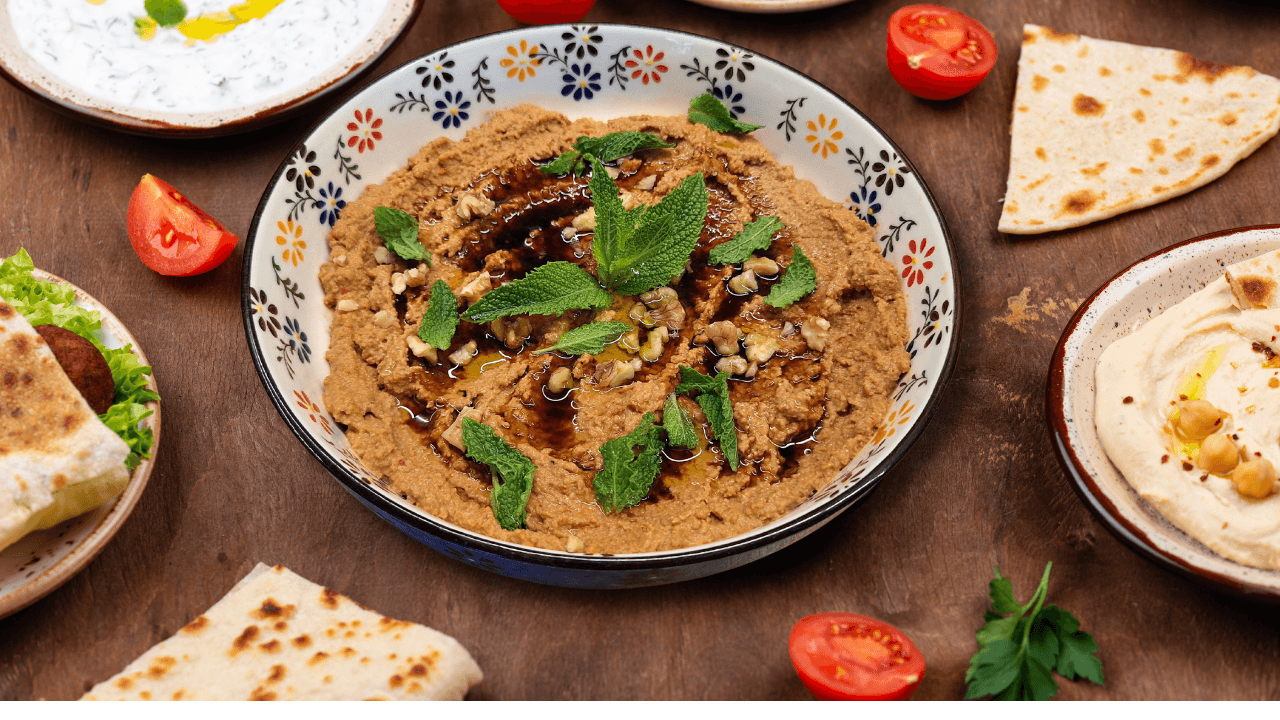
Muhammara is a Levantine red pepper and walnut spread known for its deep, savory-sweet flavor and rich, slightly textured consistency. Roasted peppers, walnuts and breadcrumbs form the base, while pomegranate molasses adds tangy sweetness and Aleppo pepper brings gentle heat and complexity.
What is Muhammara?
Muhammara is made by blending roasted red peppers with walnuts, breadcrumbs and seasonings until the mixture becomes thick enough to spread or scoop. Pomegranate molasses contributes acidity and sweetness, while olive oil helps bring the ingredients together into a rich, cohesive texture.
Unlike a completely smooth dip, Muhammara often retains some texture from the walnuts and breadcrumbs. It can be served as part of a mezze spread, spooned alongside bread or vegetables, or used as a condiment with other dishes.
Muhammara in Syrian and Levantine food culture
Muhammara is especially associated with Aleppo in northern Syria, a city known for its deeply flavored, pepper-forward cooking. From there, the spread became familiar across the wider Levant and is now commonly encountered in Syrian, Lebanese and other eastern Mediterranean food traditions.
It is usually served as part of a mezze spread, alongside bread and other small dishes, but its bold flavor also makes it useful beyond mezze. Muhammara can accompany grilled vegetables or meats, or be used as a condiment where its combination of sweetness, acidity, nuttiness, and gentle heat can stand out.
What does Muhammara taste like?
Muhammara is savory, nutty and slightly sweet, with a gentle tang from pomegranate molasses and a mild warmth from pepper and spices. Roasted red peppers give the spread its sweetness and depth, while walnuts add richness and a faint bitterness that keeps the flavor from becoming too sweet.
Its texture is usually thicker and more substantial than a smooth purée. Finely ground walnuts and breadcrumbs give Muhammara body, while olive oil softens the mixture and helps create a spreadable consistency. Depending on how finely it is blended, it can range from fairly smooth to pleasantly coarse.
How Muhammara varies
Muhammara does not have one rigid formula. The balance of peppers, walnuts, breadcrumbs and pomegranate molasses can vary considerably from one cook to another. Some versions are sweeter or more acidic, some emphasize chili heat, and the finished texture can range from relatively smooth to coarse and chunky.
The supporting ingredients vary too. Recipes may use fresh roasted peppers or pepper-based pastes, while additions such as lemon juice, cumin or tahini appear in some versions but not others. What remains consistent is the combination of red pepper, walnuts and a sweet-tart element that gives Muhammara its distinctive character.
Where does Muhammara come from?
Muhammara is most closely associated with Aleppo in northern Syria, where red pepper pastes and Aleppo pepper are central to the local flavor profile. The spread is widely regarded as Syrian in origin, although there is no single well-documented moment or inventor that can be credited with creating the dish.
The name Muhammara is commonly translated as “reddened” or “crimsoned,” a reference to the deep red color of the pepper-based mixture. Traditional versions were often made with concentrated or sun-dried Aleppo peppers, while many modern recipes use roasted red peppers to create a similar rich, sweet-pepper base.
Make Muhammara at home
Ready to make it yourself? Follow the full Muhammara recipe with ingredients, step-by-step instructions, recipe notes and video.