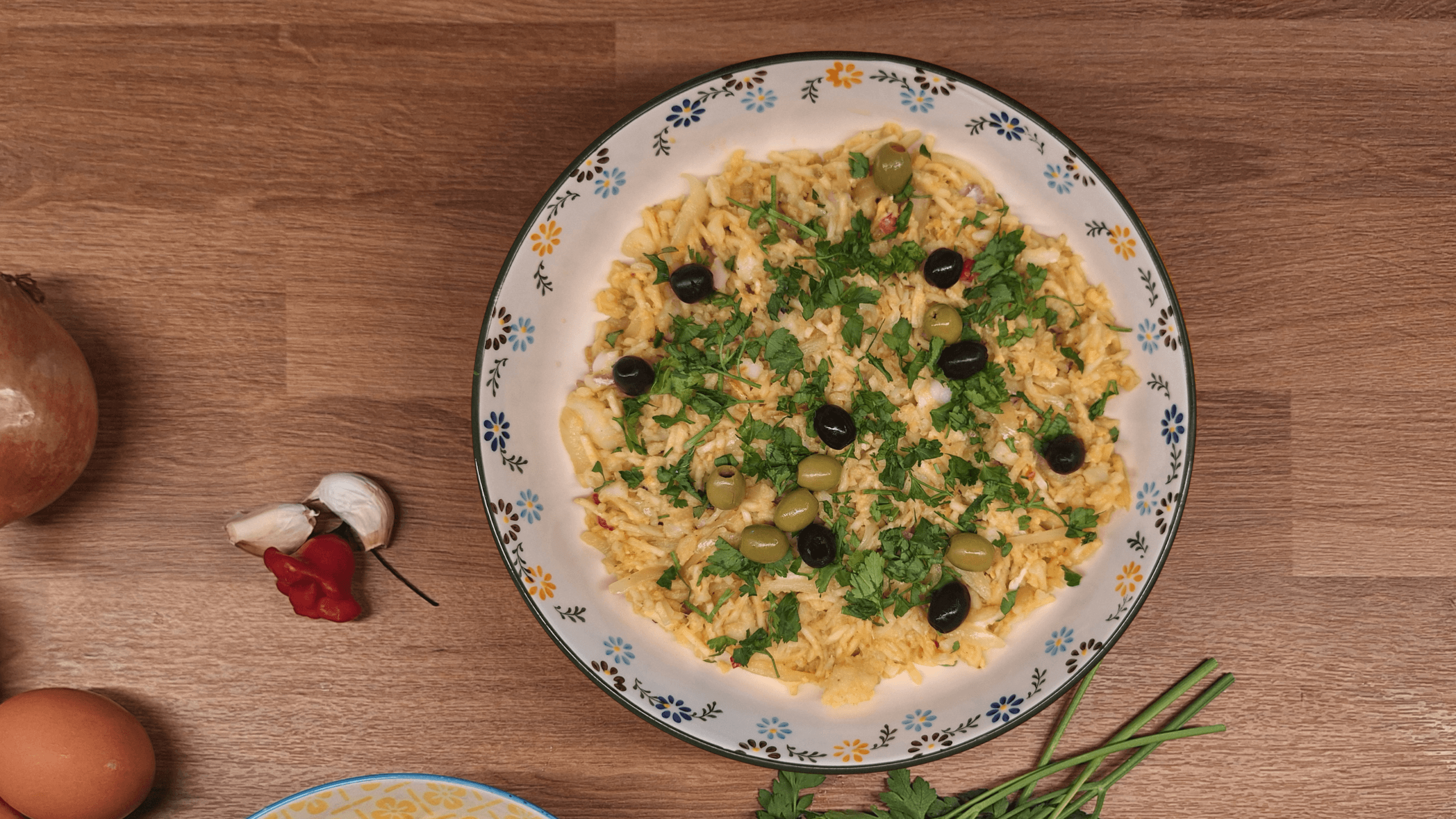
This Bacalhau à Brás recipe combines shredded cod with soft onions, fried potato sticks and creamy eggs, then finishes everything with olives and fresh parsley. It comes together quickly in one pan and is best served while the eggs are still soft and silky.
Watch how to make Bacalhau à Brás
Ingredients
1 large onion, thinly sliced
2 garlic cloves, thinly sliced
1 red chili, optional
500 g (about 1.1 lb) shredded cod
150 g (about 5.3 oz) fried potato sticks
1 bay leaf, optional
Olive oil, as needed
4 eggs, lightly beaten
1 handful black and green olives
Fresh parsley, as needed
Salt and freshly ground black pepper, to taste
Instructions
Soften the onion
Heat a little olive oil in a frying pan over medium heat.
Add the onion and cook until soft and translucent.
Add the garlic, red chili, and bay leaf if using, and cook for another minute.
Cook the cod
Add the shredded cod.
Cover the pan and cook over low heat for about 5 minutes, or until the cod turns white.
Add the potatoes
Remove the bay leaf if using.
Add the fried potato sticks and stir for 1 to 2 minutes, until they soften slightly.
Add the eggs
Pour in the lightly beaten eggs.
Season with salt and freshly ground black pepper.
Finish the dish
Stir well and cook for 1 to 2 minutes more, then remove the pan from the heat.
The eggs should remain soft and creamy rather than fully set.
Garnish and serve
Top with the black and green olives and fresh parsley.
Serve immediately.
Recipe Notes
Keep the eggs soft
The eggs should stay creamy and slightly loose rather than cooking until completely firm. Remove the pan from the heat as soon as they begin to set, since they will continue cooking from the residual heat.
Add the potatoes near the end
The fried potato sticks only need a short time in the pan. Stir them in briefly so they soften slightly while still keeping some texture.
Season carefully
Cod can already be quite salty, so taste before adding too much extra salt. Adjust the seasoning only after the cod and potatoes are in the pan.
Use the chili only if you want heat
The red chili is optional. Leave it out for a more traditional mild version, or include it if you prefer a little extra heat.
Serve immediately
Bacalhau à Brás is best served straight away while the eggs are still soft and the potatoes have not absorbed too much moisture.
Learn more about Bacalhau à Brás
Want to learn more about the dish, its flavors, variations, and place in Portuguese food culture? Read our guide to Bacalhau à Brás.
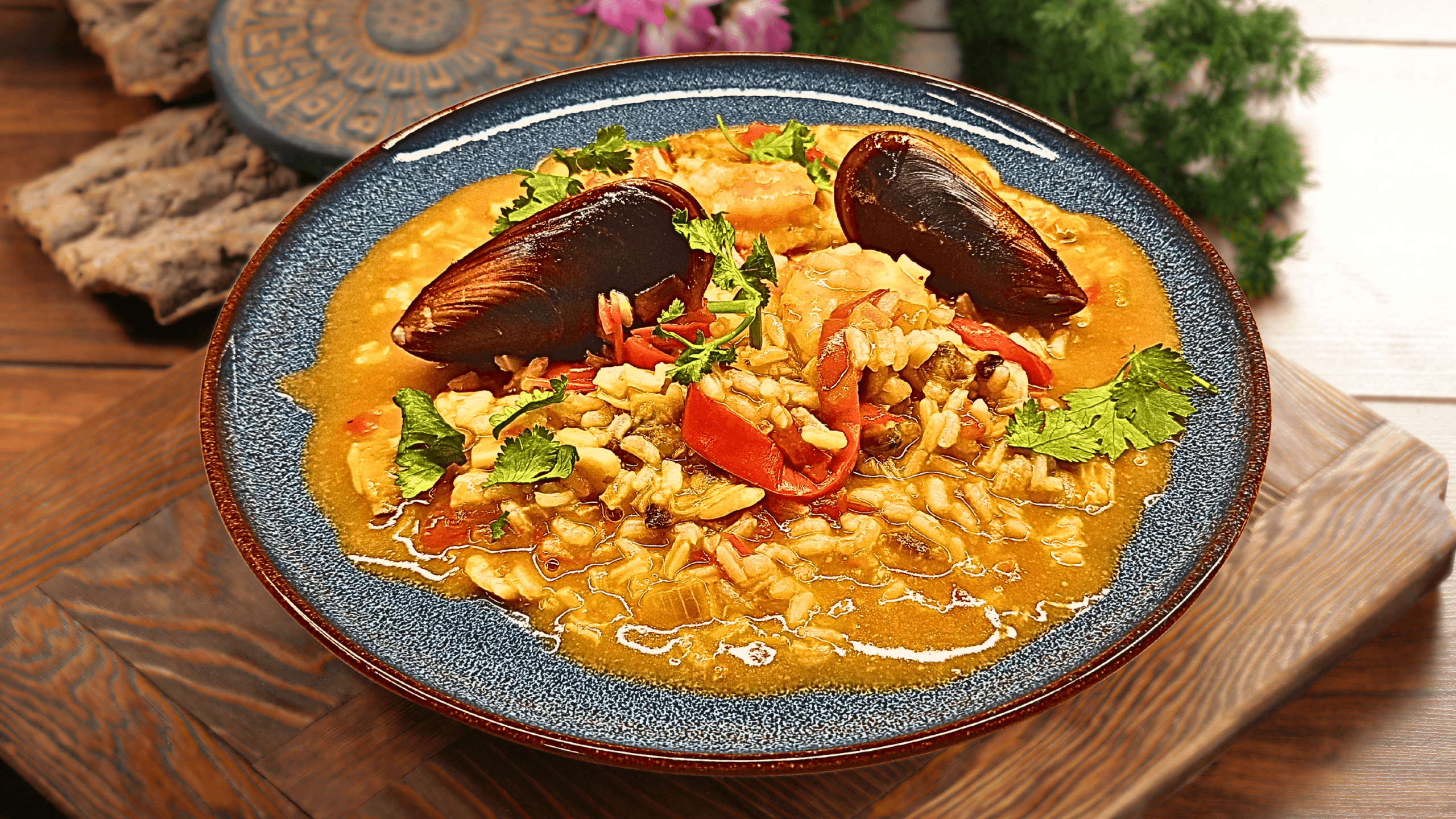
This Arroz de Marisco recipe combines Carolino rice with shrimp, mussels and clams in a loose, deeply flavored broth made from shrimp shells, tomatoes, white wine, peppers and garlic. The seafood is added in stages so it stays tender, while the rice remains brothy and almost soup-like rather than dry.
Watch how to make Arroz de Marisco
Ingredients
Seafood
500 g (1 lb 2 oz) pre-cooked whole shrimp, preferably with heads and shells
500 g (1 lb 2 oz) pre-cooked mussels
250 g (9 oz) raw clams, in their shells
For the rice
2 cups (approximately 400 g / 14 oz) Carolino rice
1 medium onion, diced (approximately 150 g / 5 oz)
4 garlic cloves, thinly sliced
1 large red bell pepper, cut into thin strips
4 medium tomatoes, diced (approximately 500 g / 1 lb 2 oz)
2 bay leaves
100 ml (3½ fl oz / scant ½ cup) dry white wine
1 tbsp (15 ml) balsamic glaze, optional, or 1–2 tsp balsamic vinegar, to taste
Olive oil, as needed
Salt, to taste
1 small bunch fresh cilantro, roughly chopped (approximately 30 g / 1 oz)
Instructions
Prepare the shrimp and broth
Remove the heads, shells, and legs from the shrimp, but do not discard them.
Using a small knife, make a shallow cut along the back of each shrimp and remove the dark digestive tract. Set the cleaned shrimp aside.
Place the shrimp heads, shells, and legs in a pot. Add enough water to cover them by about 5 cm (2 inches).
Bring the water almost to a boil, then immediately reduce the heat to maintain a very gentle simmer.
Simmer uncovered for 25–30 minutes. Avoid boiling the broth vigorously.
Strain the broth, pressing the shells lightly to extract their flavor. Discard the shells and keep the broth hot.
Measure out 5 cups (1.2 litres / 40 fl oz). If you do not have enough broth, top it up with hot water. Keep some additional hot water nearby in case the rice needs more liquid later.
Prepare the vegetables
While the broth simmers, cut the red bell pepper into thin strips.
Dice the onion and tomatoes, thinly slice the garlic, and roughly chop the cilantro.
Build the tomato base
Add a generous drizzle of olive oil to a large, deep pot and place it over medium heat.
Add the onion and garlic and cook until softened and the onion begins to develop a little color.
Add the red bell pepper and continue cooking until it begins to soften.
Stir in the balsamic glaze if using. If using ordinary balsamic vinegar instead, begin with 1 teaspoon and add more only if needed.
Add the tomatoes and bay leaves.
Season with a small amount of salt to help draw moisture from the tomatoes.
Cook, stirring occasionally, until the tomatoes have broken down and formed a loose sauce.
Add the wine and broth
Pour in the white wine and cook until most of the wine has evaporated and the tomato mixture has thickened slightly.
Add 5 cups of the reserved shrimp broth and bring everything to a boil.
Cook the rice and seafood
Add the Carolino rice and stir briefly.
Taste the broth and adjust the salt if necessary, remembering that the shellfish may add more salt later.
Reduce the heat, cover the pot, and allow the rice to simmer gently. Stir occasionally to prevent it from sticking to the bottom.
After about 8–10 minutes, add the raw clams and gently mix them into the rice.
Cover again and cook for about 5–7 minutes, or until the clams begin to open and the rice is nearly tender.
Add the pre-cooked mussels and gently fold them through the rice.
About 2 minutes later, add the pre-cooked shrimp.
Continue cooking only until the mussels and shrimp are heated through and the rice is tender.
The total rice cooking time should generally be around 15–20 minutes, depending on the Carolino rice you use.
Finish and serve
Keep the Arroz de Marisco very loose and brothy — almost soup-like, never dry like paella.
Add more hot broth or water whenever necessary to maintain that consistency.
Discard the bay leaves and any clams that have remained closed.
Remove the pot from the heat and let it rest for only 1–2 minutes.
Garnish generously with freshly chopped cilantro and serve immediately.
Recipe Notes
Keep the rice loose and brothy
Arroz de Marisco should not finish dry like paella. Carolino rice continues absorbing liquid as it sits, so keep extra hot broth or water nearby and add more whenever necessary to maintain a loose, almost soup-like consistency.
Carolino rice works best
Carolino rice is particularly well suited to this dish because it absorbs the seafood broth while releasing enough starch to give the liquid a slightly creamy texture. If you substitute another rice, the cooking time and amount of liquid may need adjusting.
Do not overcook pre-cooked seafood
Because the shrimp and mussels are already cooked, they only need enough time to heat through. Adding them near the end helps prevent them from becoming tough or rubbery.
If using raw shrimp
Whole raw shrimp can be prepared the same way: use the heads and shells for the broth, then keep the cleaned shrimp refrigerated until needed. Add the raw shrimp near the end and cook only until opaque and just cooked through, usually a few minutes depending on their size.
Check the clams carefully
Clean the clams well before cooking and discard any with damaged shells. After cooking, discard any clams that remain tightly closed.
Season gradually
Shellfish and seafood broth can contribute a surprising amount of salt. Season the tomato base lightly, then taste again after the broth and seafood have been added before making the final adjustment.
Serve without delay
Once the rice is cooked, let it rest for only 1–2 minutes. Carolino rice absorbs liquid quickly, so Arroz de Marisco is at its best when served immediately while plenty of broth still surrounds the rice.
Learn more about Arroz de Marisco
Want to learn more about the dish, its flavors, variations and place in Portuguese food culture? Read our guide to Arroz de Marisco.