Portuguese

  • Bolo de Bolacha

    Bolo de Bolacha

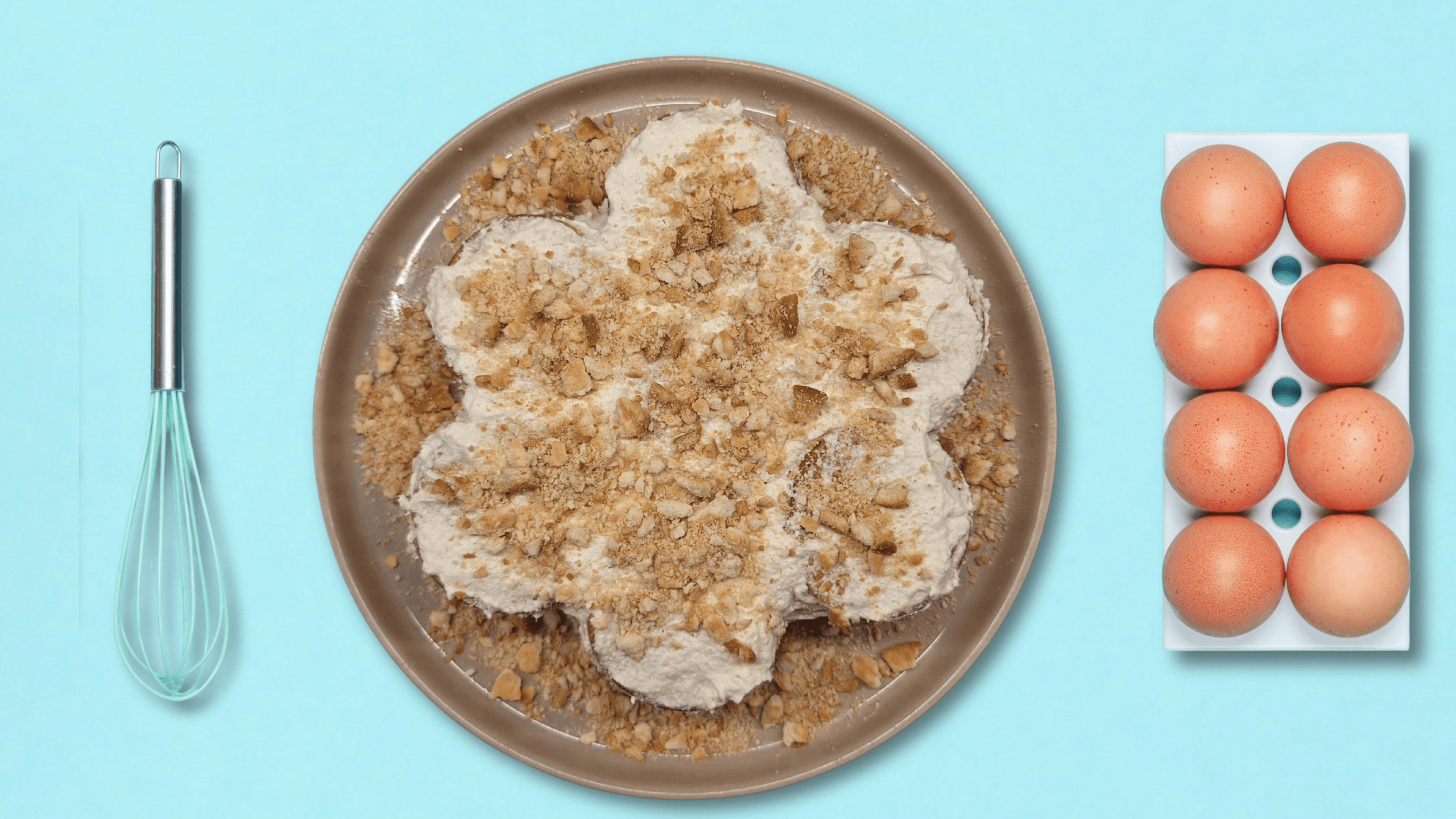
    Bolo de Bolacha is a classic Portuguese no-bake dessert made by layering Maria biscuits dipped in coffee with a rich butter-based cream. After chilling, the biscuits soften and the layers meld together into a tender, sliceable cake with deep coffee flavor and a smooth, creamy texture.

    What is Bolo de Bolacha

    Bolo de Bolacha is a Portuguese no-bake cake made from layers of Maria biscuits briefly dipped in coffee and spread with a butter-based cream. Once assembled, the cake is chilled for several hours so the biscuits soften and absorb moisture from the coffee and cream.

    In this version, the cream is made with a Swiss meringue base of egg whites and sugar before softened butter is gradually incorporated. This creates a smooth, stable buttercream that contrasts with the softened coffee-soaked biscuits and gives the finished cake a rich but light texture.

    Bolo de Bolacha in Portuguese food culture

    Bolo de Bolacha is one of Portugal’s best-known home-style desserts, built from simple pantry ingredients and requiring no baking. Its combination of Maria biscuits, strong coffee and butter-based cream has made it a familiar dessert across generations, often associated with family meals, celebrations and informal gatherings.

    There is no single fixed version. Some recipes use a straightforward butter-and-sugar cream, while others include egg yolks, whipped cream or other variations. What remains characteristic is the repeated layering of coffee-soaked Maria biscuits with a rich cream, followed by chilling until the cake becomes soft enough to slice.

    What does Bolo de Bolacha taste like?

    Bolo de Bolacha is rich, creamy and deeply coffee-flavored, with a soft texture that develops as the biscuits absorb moisture during chilling. The Maria biscuits retain just enough structure to create distinct layers while becoming tender enough to cut easily with a fork.

    The buttercream adds sweetness and richness, while the coffee brings bitterness and depth that keeps the dessert from tasting overly sugary. In this version, the Swiss meringue buttercream gives the cake a particularly smooth, light texture despite its generous butter content.

    How Bolo de Bolacha varies

    Bolo de Bolacha has many home-style variations, especially in the type of cream used between the biscuit layers. Some versions use a simple butter-and-sugar cream, while others incorporate egg yolks, whipped cream, condensed milk or different buttercream styles.

    The decoration can also vary. Crushed Maria biscuits are common, but cocoa powder, chocolate shavings or other simple toppings may be added. This version uses a Swiss meringue buttercream made from egg whites, sugar and butter, giving the cake a smoother and lighter-textured cream than many traditional versions.

    Where does Bolo de Bolacha come from?

    Bolo de Bolacha is strongly associated with Portuguese home baking and café culture, but its exact origin is difficult to pin down to a single place or moment. The dessert grew around the widespread use of Maria biscuits, coffee and butter-based creams, ingredients that became deeply familiar in Portuguese households during the twentieth century.

    Over time, Bolo de Bolacha became a classic no-bake dessert served at family gatherings, celebrations and restaurants throughout Portugal. Its popularity comes partly from its simplicity: inexpensive ingredients, no oven required, and a structure that can be adapted easily from one household to another.

    Make Bolo de Bolacha at home

    Ready to make it yourself? Follow the full Bolo de Bolacha recipe with ingredients, step-by-step instructions, recipe notes and video.
  • Bacalhau à Brás

    Bacalhau à Brás

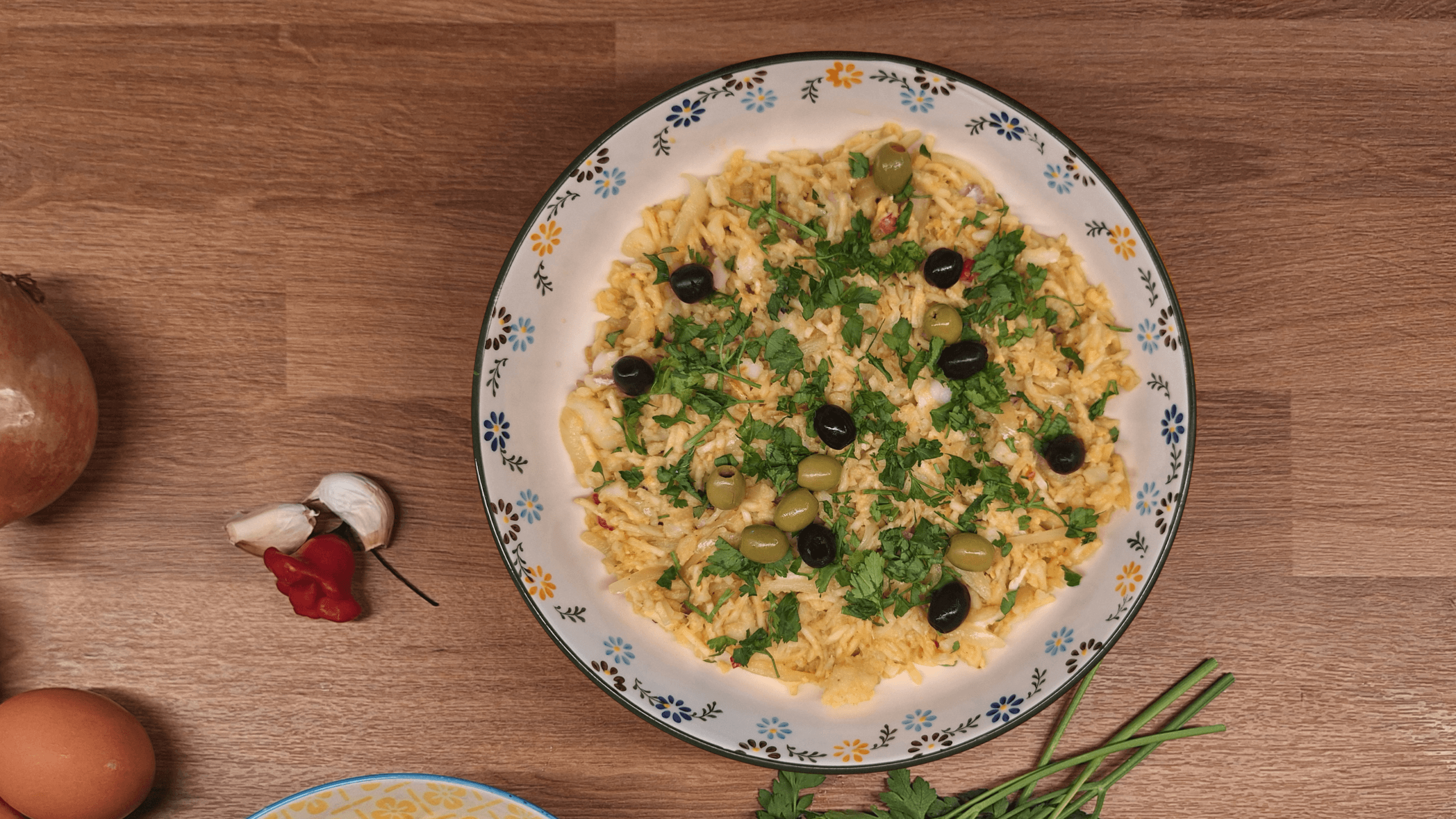
    Bacalhau à Brás is a classic Portuguese dish made with shredded cod, thin fried potato sticks, onions, and softly cooked eggs. Finished with olives and fresh parsley, it is rich, savory and comforting while still coming together quickly in one pan.

    What is Bacalhau à Brás?

    Bacalhau à Brás is a Portuguese dish made by combining shredded cod with onions, thin fried potato sticks and softly cooked eggs. The mixture is cooked just until the eggs become creamy, then finished with olives and fresh parsley.

    The dish is known for its contrast of textures: tender cod, soft onions, crisp-tender potato sticks and silky eggs. Although the ingredient list is simple, the balance between the salty cod, rich eggs and potatoes gives Bacalhau à Brás its distinctive character.

    Bacalhau à Brás in Portuguese food culture

    Bacalhau à Brás is one of Portugal’s best-known cod dishes and reflects the country’s long tradition of cooking with bacalhau, or salt cod. Cod appears in countless Portuguese preparations, from simple home cooking to festive meals, and Bacalhau à Brás is one of the most popular everyday versions.

    The dish is especially appreciated for turning a small number of familiar ingredients into something rich and satisfying. Its combination of cod, potatoes, eggs, onions, olives and parsley makes it both practical and deeply associated with Portuguese comfort food.

    What does Bacalhau à Brás taste like?

    Bacalhau à Brás is savory, salty and rich, with the cod providing most of the dish’s depth and the eggs giving it a soft, creamy texture. The fried potato sticks add a gentle crispness, while the onions bring sweetness and balance.

    Olives add a briny contrast, and fresh parsley lifts the dish with a clean herbal note. When cooked properly, the eggs should remain soft rather than fully set, which keeps the whole dish moist and cohesive.

    How Bacalhau à Brás varies

    Bacalhau à Brás varies mainly in the proportion of cod, potatoes and eggs, as well as in how creamy the final mixture is. Some versions use more potato for extra texture, while others emphasize the cod and eggs.

    The garnish can also vary, with some cooks using only black olives and others adding green olives as well. Optional additions such as chili or bay leaf can bring extra depth, but the core combination of shredded cod, onions, fried potato sticks and softly cooked eggs remains the defining feature.

    Where does Bacalhau à Brás come from?

    Bacalhau à Brás is generally associated with Lisbon and is traditionally linked to a cook or tavern owner named Brás, who is said to have created the dish using shredded cod, onions, fried potatoes and eggs.

    The recipe became widely popular throughout Portugal and is now considered one of the country’s classic bacalhau preparations. Its simple ingredients and quick preparation helped make it a familiar dish in both homes and restaurants.

    Make Bacalhau à Brás at home

    Ready to make it yourself? Follow the full Bacalhau à Brás recipe with ingredients, step-by-step instructions, recipe notes, and video.

  • Arroz de Marisco

    Arroz de Marisco

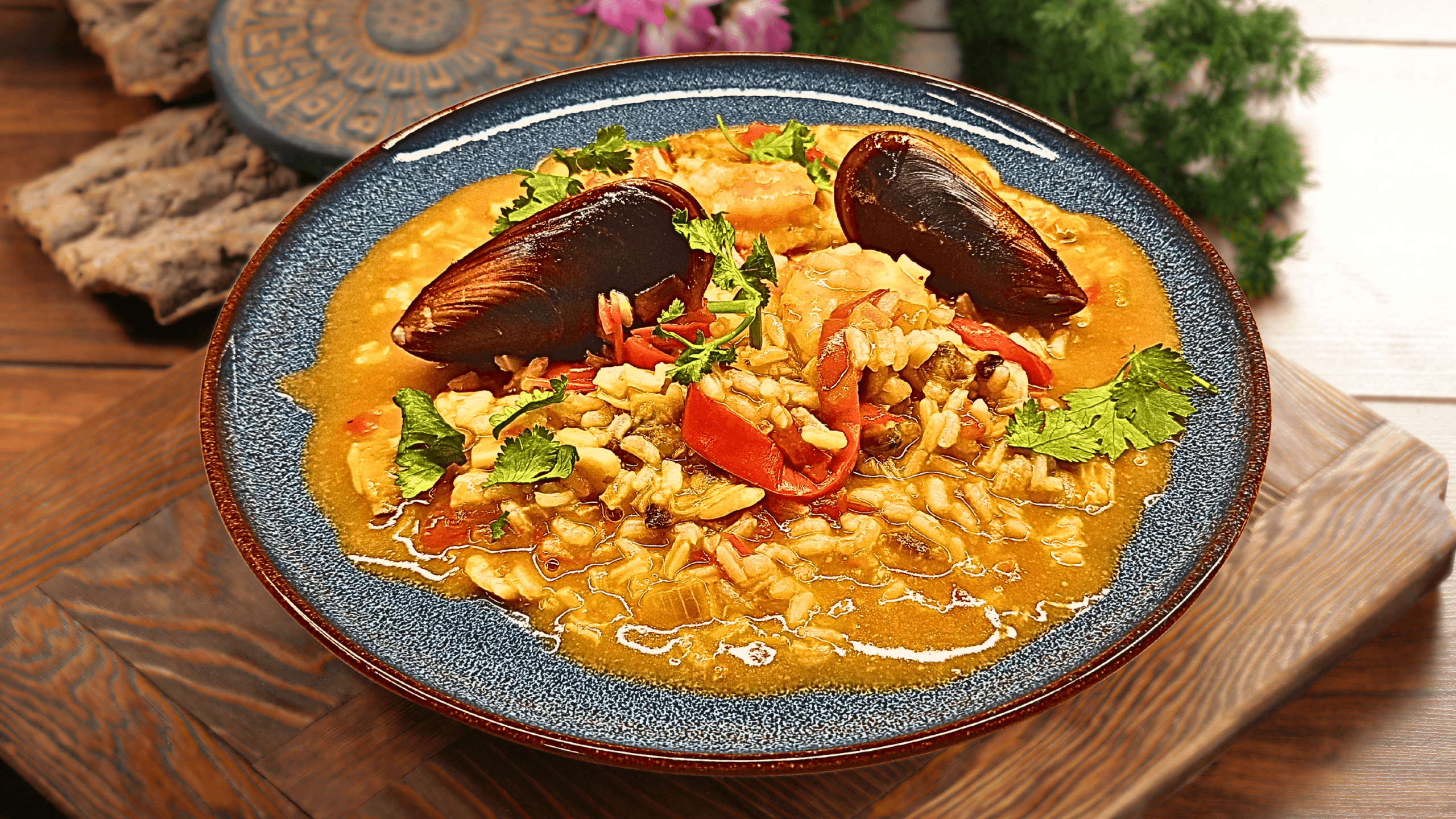
    Arroz de Marisco is a Portuguese seafood rice dish made with Carolino rice, shrimp, mussels, and clams cooked in a rich tomato and shellfish broth. Unlike paella, the rice is kept loose and brothy, with white wine, peppers, garlic, and cilantro adding depth and freshness.

    What is Arroz de Marisco?

    Arroz de Marisco is a Portuguese seafood rice dish made by cooking rice directly in a flavorful broth with shellfish such as shrimp, mussels and clams. Tomatoes, peppers, garlic and white wine build the base, while the rice absorbs the broth as it cooks.

    Unlike drier rice dishes, Arroz de Marisco is meant to remain loose, saucy and almost soup-like. Carolino rice is especially well suited to the dish because it absorbs flavor while releasing enough starch to give the broth a slightly creamy texture.

    Arroz de Marisco in Portuguese food culture

    Arroz de Marisco is a well-known Portuguese seafood dish, especially associated with coastal cooking and the country’s strong tradition of preparing rice with fish and shellfish. It is commonly served as a generous shared meal, with the rice carrying the flavor of the seafood broth rather than being cooked dry.

    The dish reflects the importance of seafood in Portuguese cuisine, combining shellfish with tomatoes, peppers, garlic, wine and fresh herbs. Its loose, brothy texture is part of what distinguishes it from drier rice dishes and makes it especially comforting and satisfying.

    What does Arroz de Marisco taste like?

    Arroz de Marisco is rich, savory and deeply seafood-forward, with the shrimp broth carrying the flavor of the shellfish into every grain of rice. Tomatoes, garlic, onions and red bell pepper add sweetness and depth, while white wine brings a light acidity.

    The rice itself is soft and creamy rather than dry, with a loose broth surrounding it. Fresh cilantro adds a bright herbal finish, while the shrimp, mussels and clams provide different layers of briny, sweet and ocean-like flavor.

    How Arroz de Marisco varies

    Arroz de Marisco varies depending on the seafood available, with different versions using combinations of shrimp, clams, mussels, crab, lobster or pieces of fish. The broth can also vary in intensity depending on whether it is made from shrimp shells, other seafood, or a prepared fish stock.

    The amount of tomato, wine and herbs differs from cook to cook, as does the final consistency. Some versions are slightly thicker, while others are served with plenty of broth. This version uses shrimp, mussels and clams with Carolino rice and keeps the finished dish deliberately loose and almost soup-like.

    Where does Arroz de Marisco come from?

    Arroz de Marisco comes from Portugal’s coastal cooking traditions, where rice is often prepared with fish and shellfish in flavorful broths. The dish reflects the country’s long connection to the Atlantic and its extensive use of seafood in everyday and celebratory meals.

    Over time, Arroz de Marisco became one of Portugal’s best-known seafood rice dishes, with regional and household versions using whatever shellfish is freshest and most available. The defining feature is not one exact combination of seafood, but the generous, brothy style of cooking the rice together with shellfish and its cooking liquid.

    Make Arroz de Marisco at home

    Ready to make it yourself? Follow the full Arroz de Marisco recipe with ingredients, step-by-step instructions, recipe notes and video.

  • Bolo de Bolacha

    Bolo de Bolacha

    This Bolo de Bolacha recipe layers coffee-dipped Maria biscuits with a smooth Swiss meringue buttercream made from egg whites, sugar and butter. After several hours in the refrigerator, the biscuits soften and the layers set into a rich, tender Portuguese no-bake cake with deep coffee flavor.

    Watch how to make Bolo de Bolacha

    Ingredients

    • 400 g (about 14 oz) Maria biscuits
    • 4 egg whites, about 1/2 cup
    • 150 g (3/4 cup) granulated sugar
    • 250 g (about 1 cup + 2 tbsp) unsalted butter, softened
    • 150 ml (about 2/3 cup) strong coffee, cooled
    • 1/2 tsp vanilla extract, optional

    Isntructions

    Make and cool the coffee

    Make the strong coffee and set it aside to cool completely. The coffee should be cold before dipping the biscuits so they do not soften too quickly and the cream stays stable.

    Prepare the Swiss meringue

    Place the egg whites and sugar in a heatproof bowl set over a pan of gently simmering water, making sure the bottom of the bowl does not touch the water.

    Stir constantly until the sugar has fully dissolved and the mixture feels warm and smooth when rubbed between your fingers, with no sugar grains remaining.

    Transfer the mixture to the bowl of a stand mixer and beat until glossy, fluffy and completely cooled.

    Make the buttercream

    Once the meringue has cooled, add the softened butter little by little while beating continuously.

    Keep mixing until all the butter is incorporated and the cream is smooth and thick. The butter should be soft but not melted, and it should not be fridge-cold.

    If using vanilla extract, beat it in at the end.

    Assemble the cake

    Quickly dip each Maria biscuit into the cold coffee, then arrange the biscuits on a serving plate in a circular shape.

    Spread a layer of cream over the biscuits, roughly the same thickness as the biscuits themselves.

    Repeat the process, alternating layers of coffee-dipped biscuits and cream, until the biscuits are used up or the cake reaches your desired height.

    Finish and chill

    Decorate with crushed or grated Maria biscuits, cocoa powder, or a mixture of both.

    Refrigerate for several hours, ideally overnight, before serving so the biscuits soften and the layers set.

    Recipe Notes

    Biscuit quantity

    The number of Maria biscuits you need may vary depending on the shape of the cake, the thickness of the cream layers and how tall you want the cake to be.

    If the cream looks split

    If the cream looks split or curdled while mixing, keep beating patiently. This often happens when the meringue or butter is at the wrong temperature, and in most cases the cream will come back together and become smooth.

    If the cream is too loose

    If the cream still looks too loose, chill the bowl for a few minutes, then continue beating.

    If the cream is too firm or grainy

    If the cream looks too firm or grainy, the butter may have been too cold. Keep mixing a little longer until it softens into the cream.

    Chill before serving

    For the best texture, refrigerate the cake for several hours, ideally overnight. This gives the biscuits time to soften and the layers time to set.

    Cover the top and sides of the cake with the remaining cream and smooth it with a spatula.

    Learn more about Bolo de Bolacha

    Want to know more about the dish itself? Explore the history, food culture, variations and story behind Bolo de Bolacha.

  • Bacalhau à Brás

    Bacalhau à Brás

    This Bacalhau à Brás recipe combines shredded cod with soft onions, fried potato sticks and creamy eggs, then finishes everything with olives and fresh parsley. It comes together quickly in one pan and is best served while the eggs are still soft and silky.

    Watch how to make Bacalhau à Brás

    Ingredients

    • 1 large onion, thinly sliced
    • 2 garlic cloves, thinly sliced
    • 1 red chili, optional
    • 500 g (about 1.1 lb) shredded cod
    • 150 g (about 5.3 oz) fried potato sticks
    • 1 bay leaf, optional
    • Olive oil, as needed
    • 4 eggs, lightly beaten
    • 1 handful black and green olives
    • Fresh parsley, as needed
    • Salt and freshly ground black pepper, to taste

    Instructions

    Soften the onion

    Heat a little olive oil in a frying pan over medium heat.

    Add the onion and cook until soft and translucent.

    Add the garlic, red chili, and bay leaf if using, and cook for another minute.

    Cook the cod

    Add the shredded cod.

    Cover the pan and cook over low heat for about 5 minutes, or until the cod turns white.

    Add the potatoes

    Remove the bay leaf if using.

    Add the fried potato sticks and stir for 1 to 2 minutes, until they soften slightly.

    Add the eggs

    Pour in the lightly beaten eggs.

    Season with salt and freshly ground black pepper.

    Finish the dish

    Stir well and cook for 1 to 2 minutes more, then remove the pan from the heat.

    The eggs should remain soft and creamy rather than fully set.

    Garnish and serve

    Top with the black and green olives and fresh parsley.

    Serve immediately.

    Recipe Notes

    Keep the eggs soft

    The eggs should stay creamy and slightly loose rather than cooking until completely firm. Remove the pan from the heat as soon as they begin to set, since they will continue cooking from the residual heat.

    Add the potatoes near the end

    The fried potato sticks only need a short time in the pan. Stir them in briefly so they soften slightly while still keeping some texture.

    Season carefully

    Cod can already be quite salty, so taste before adding too much extra salt. Adjust the seasoning only after the cod and potatoes are in the pan.

    Use the chili only if you want heat

    The red chili is optional. Leave it out for a more traditional mild version, or include it if you prefer a little extra heat.

    Serve immediately

    Bacalhau à Brás is best served straight away while the eggs are still soft and the potatoes have not absorbed too much moisture.

    Learn more about Bacalhau à Brás

    Want to learn more about the dish, its flavors, variations, and place in Portuguese food culture? Read our guide to Bacalhau à Brás.

  • Arroz de Marisco

    Arroz de Marisco

    This Arroz de Marisco recipe combines Carolino rice with shrimp, mussels and clams in a loose, deeply flavored broth made from shrimp shells, tomatoes, white wine, peppers and garlic. The seafood is added in stages so it stays tender, while the rice remains brothy and almost soup-like rather than dry.

    Watch how to make Arroz de Marisco

    Ingredients

    Seafood

    • 500 g (1 lb 2 oz) pre-cooked whole shrimp, preferably with heads and shells
    • 500 g (1 lb 2 oz) pre-cooked mussels
    • 250 g (9 oz) raw clams, in their shells

    For the rice

    • 2 cups (approximately 400 g / 14 oz) Carolino rice
    • 5 cups (1.2 litres / 40 fl oz) reserved shrimp broth
    • Additional hot broth or water, as needed

    For the tomato base

    • 1 medium onion, diced (approximately 150 g / 5 oz)
    • 4 garlic cloves, thinly sliced
    • 1 large red bell pepper, cut into thin strips
    • 4 medium tomatoes, diced (approximately 500 g / 1 lb 2 oz)
    • 2 bay leaves
    • 100 ml (3½ fl oz / scant ½ cup) dry white wine
    • 1 tbsp (15 ml) balsamic glaze, optional, or 1–2 tsp balsamic vinegar, to taste
    • Olive oil, as needed
    • Salt, to taste
    • 1 small bunch fresh cilantro, roughly chopped (approximately 30 g / 1 oz)

    Instructions

    Prepare the shrimp and broth

    Remove the heads, shells, and legs from the shrimp, but do not discard them.

    Using a small knife, make a shallow cut along the back of each shrimp and remove the dark digestive tract. Set the cleaned shrimp aside.

    Place the shrimp heads, shells, and legs in a pot. Add enough water to cover them by about 5 cm (2 inches).

    Bring the water almost to a boil, then immediately reduce the heat to maintain a very gentle simmer.

    Simmer uncovered for 25–30 minutes. Avoid boiling the broth vigorously.

    Strain the broth, pressing the shells lightly to extract their flavor. Discard the shells and keep the broth hot.

    Measure out 5 cups (1.2 litres / 40 fl oz). If you do not have enough broth, top it up with hot water. Keep some additional hot water nearby in case the rice needs more liquid later.

    Prepare the vegetables

    While the broth simmers, cut the red bell pepper into thin strips.

    Dice the onion and tomatoes, thinly slice the garlic, and roughly chop the cilantro.

    Build the tomato base

    Add a generous drizzle of olive oil to a large, deep pot and place it over medium heat.

    Add the onion and garlic and cook until softened and the onion begins to develop a little color.

    Add the red bell pepper and continue cooking until it begins to soften.

    Stir in the balsamic glaze if using. If using ordinary balsamic vinegar instead, begin with 1 teaspoon and add more only if needed.

    Add the tomatoes and bay leaves.

    Season with a small amount of salt to help draw moisture from the tomatoes.

    Cook, stirring occasionally, until the tomatoes have broken down and formed a loose sauce.

    Add the wine and broth

    Pour in the white wine and cook until most of the wine has evaporated and the tomato mixture has thickened slightly.

    Add 5 cups of the reserved shrimp broth and bring everything to a boil.

    Cook the rice and seafood

    Add the Carolino rice and stir briefly.

    Taste the broth and adjust the salt if necessary, remembering that the shellfish may add more salt later.

    Reduce the heat, cover the pot, and allow the rice to simmer gently. Stir occasionally to prevent it from sticking to the bottom.

    After about 8–10 minutes, add the raw clams and gently mix them into the rice.

    Cover again and cook for about 5–7 minutes, or until the clams begin to open and the rice is nearly tender.

    Add the pre-cooked mussels and gently fold them through the rice.

    About 2 minutes later, add the pre-cooked shrimp.

    Continue cooking only until the mussels and shrimp are heated through and the rice is tender.

    The total rice cooking time should generally be around 15–20 minutes, depending on the Carolino rice you use.

    Finish and serve

    Keep the Arroz de Marisco very loose and brothy — almost soup-like, never dry like paella.

    Add more hot broth or water whenever necessary to maintain that consistency.

    Discard the bay leaves and any clams that have remained closed.

    Remove the pot from the heat and let it rest for only 1–2 minutes.

    Garnish generously with freshly chopped cilantro and serve immediately.

    Recipe Notes

    Keep the rice loose and brothy

    Arroz de Marisco should not finish dry like paella. Carolino rice continues absorbing liquid as it sits, so keep extra hot broth or water nearby and add more whenever necessary to maintain a loose, almost soup-like consistency.

    Carolino rice works best

    Carolino rice is particularly well suited to this dish because it absorbs the seafood broth while releasing enough starch to give the liquid a slightly creamy texture. If you substitute another rice, the cooking time and amount of liquid may need adjusting.

    Do not overcook pre-cooked seafood

    Because the shrimp and mussels are already cooked, they only need enough time to heat through. Adding them near the end helps prevent them from becoming tough or rubbery.

    If using raw shrimp

    Whole raw shrimp can be prepared the same way: use the heads and shells for the broth, then keep the cleaned shrimp refrigerated until needed. Add the raw shrimp near the end and cook only until opaque and just cooked through, usually a few minutes depending on their size.

    Check the clams carefully

    Clean the clams well before cooking and discard any with damaged shells. After cooking, discard any clams that remain tightly closed.

    Season gradually

    Shellfish and seafood broth can contribute a surprising amount of salt. Season the tomato base lightly, then taste again after the broth and seafood have been added before making the final adjustment.

    Serve without delay

    Once the rice is cooked, let it rest for only 1–2 minutes. Carolino rice absorbs liquid quickly, so Arroz de Marisco is at its best when served immediately while plenty of broth still surrounds the rice.

    Learn more about Arroz de Marisco

    Want to learn more about the dish, its flavors, variations and place in Portuguese food culture? Read our guide to Arroz de Marisco.