Hungary

  • Hungarian Goulash

    Hungarian Goulash

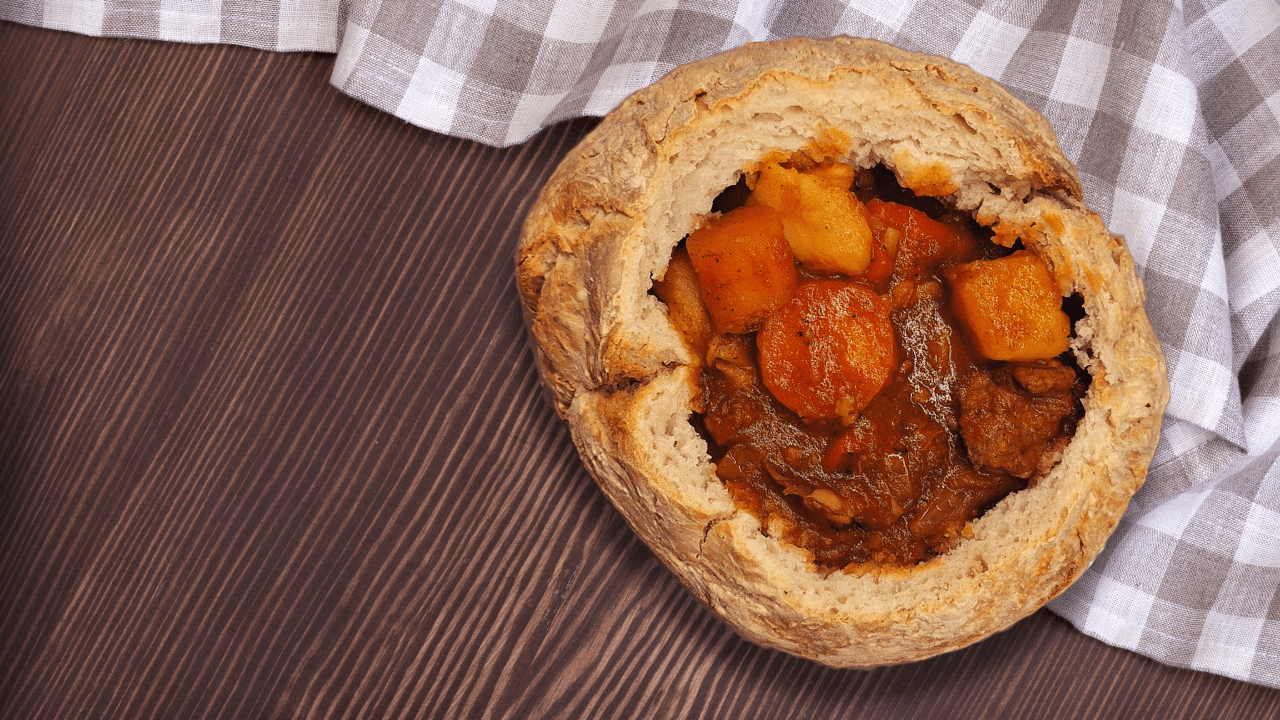
    Hungarian Goulash, or gulyás, is a hearty beef dish built around onions, sweet paprika and slow-cooked meat. This version adds red peppers, tomatoes, carrots and potatoes, then serves the tender beef and richly seasoned broth in bread bowls with a swirl of sour cream.

    What is Hungarian Goulash?

    Hungarian Goulash, known as gulyás, is a paprika-seasoned beef dish traditionally made with onions and slowly cooked until the meat becomes tender. Depending on the preparation, it can range from a brothy soup to a thicker, stew-like dish.

    This version combines beef with sweet paprika, garlic, red bell peppers, tomatoes, carrots and potatoes in a rich broth. It is finished with sour cream and served in hollowed bread loaves for a hearty presentation.

    Hungarian Goulash in Hungarian food culture

    Gulyás is one of Hungary’s most recognizable traditional dishes and is closely associated with rustic, pastoral cooking. Its name comes from the Hungarian word for cattle herder, reflecting the dish’s historical connection to herdsmen who cooked simple meat dishes over open fires.

    Paprika became central to the dish over time and is now one of the flavors most strongly associated with Hungarian cooking. Although many international versions are served as thick stews, traditional Hungarian gulyás is often more soup-like, with tender beef, vegetables and a paprika-rich broth.

    What does Hungarian Goulash taste like?

    Hungarian Goulash is rich, savory and warmly spiced, with sweet paprika providing its distinctive earthy flavor and deep red color. Slow-cooked beef adds richness, while onions, garlic, tomatoes and peppers build a full, rounded base.

    Carrots and potatoes add mild sweetness and body, while optional caraway brings a subtle aromatic note. In this version, sour cream adds a cool, tangy contrast to the hot goulash, especially when it is served in a bread bowl.

    How Hungarian Goulash varies

    Hungarian Goulash can vary in thickness, seasoning and the vegetables used. Some versions are light and soup-like, while others are cooked down into a thicker stew. Potatoes and carrots are common additions, and some cooks include peppers, tomatoes or caraway seeds.

    Outside Hungary, goulash is often adapted into richer, heavier stews and may be served with sour cream, noodles, dumplings or bread. This version leans toward a hearty stew and is served in bread bowls, making it more substantial than a traditional brothy gulyás.

    Where does Hungarian Goulash come from?

    Gulyás originated in Hungary and is traditionally linked to cattle herders on the Hungarian plains. Early versions were practical meat dishes cooked outdoors over a fire, using simple ingredients that could be prepared in a large pot and eaten communally.

    Over time, paprika became a defining ingredient, and gulyás developed into one of the dishes most strongly associated with Hungarian cuisine. As it spread beyond Hungary, the name “goulash” came to describe many different paprika-based beef stews, some of which are much thicker than traditional Hungarian versions.

    Ready to make it yourself? Follow the full Hungarian Goulash recipe with ingredients, step-by-step instructions, recipe notes and video.

  • Hungarian Goulash

    Hungarian Goulash

    This Hungarian Goulash recipe combines tender beef, sweet paprika, onions, red peppers, tomatoes, carrots, and potatoes in a rich, savory broth. The beef is browned first for extra depth, then simmered until tender and served in bread bowls with a swirl of sour cream.

    Ingredients

    • 4 tbsp butter
    • 2 large yellow onions, chopped
    • 2 tbsp sweet paprika
    • 750 g stewing beef, cut into ½-inch pieces
    • 5 garlic cloves, minced
    • 2 red bell peppers, seeded and cut into ½-inch chunks
    • 2 tomatoes, diced
    • 2 carrots, diced
    • 2 medium potatoes, cut into ½-inch chunks
    • 5 cups beef broth
    • 1 bay leaf
    • Salt, to taste
    • ½ tsp freshly ground black pepper
    • ½ tsp crushed caraway seeds, optional
    • 2 tbsp tomato paste
    • 4 round bread loaves
    • 150 ml sour cream

    Instructions

    Prepare the vegetables

    Chop the onions, cut the red bell peppers into ½-inch chunks, dice the tomatoes and carrots, and cut the potatoes into ½-inch chunks.

    Brown the beef

    Melt 1 tablespoon of the butter in a Dutch oven or other heavy pot over medium-high heat.

    Add the beef and brown it well on all sides in 3 batches, adding another tablespoon of butter for each batch.

    Remove the browned beef from the pot and set aside.

    Build the goulash base

    Add the remaining 1 tablespoon of butter to the pot.

    Add the onions, garlic, and red bell peppers and cook for 5 to 10 minutes, until softened.

    Add the tomato paste, sweet paprika, black pepper, and crushed caraway seeds, if using.

    Stir well and cook for about 2 minutes.

    Return the browned beef to the pot.

    Simmer the beef

    Add the tomatoes, beef broth, and bay leaf.

    Bring to a gentle boil, then reduce the heat to medium-low.

    Cover and simmer for 40 minutes.

    Add the carrots and potatoes

    Add the carrots and potatoes.

    Bring the goulash back to a boil, then reduce the heat again.

    Cover and simmer for another 30 to 40 minutes, or until the beef is tender.

    Taste and season with salt as needed.

    Remove the bay leaf.

    Prepare the bread bowls and serve

    Just before the goulash is ready, use a bread knife to cut a hole in the top of each bread loaf.

    Scoop out some of the inside to create a hollow center.

    Place the bread loaves on plates and ladle the hot goulash into them.

    Finish each serving with a swirl of sour cream and serve immediately.

    Recipe Notes

    Use good-quality paprika

    Paprika is one of the main flavors in this goulash, so use a good-quality sweet paprika if possible. Hungarian sweet paprika is an excellent choice and gives the stew its characteristic color and warmth.

    Brown the beef in batches

    Avoid crowding the pot when browning the beef. Cooking it in several batches allows the pieces to develop better color instead of steaming, which gives the finished goulash more depth of flavor.

    Let the beef become fully tender

    Stewing beef can vary considerably in tenderness. If it still feels firm after the stated cooking time, continue simmering gently until it becomes tender, adding a little extra broth if necessary.

    The bread bowls are optional

    The goulash can be served directly in bowls if you do not want to use bread loaves. If using bread bowls, hollow them out shortly before serving so they remain sturdy enough to hold the hot stew.

    For extra flavor in the bread bowls

    If you want a richer bread bowl, lightly spread the inside with garlic butter and warm it in the oven for a few minutes before adding the goulash.

    Good for leftovers

    The goulash can be made ahead and reheated gently. The flavors often become even more developed after resting. Store the stew separately from the bread bowls so the bread does not become soggy.

    Want to learn more about the dish, its flavors, variations and place in Hungarian food culture? Read our guide to Hungarian Goulash.