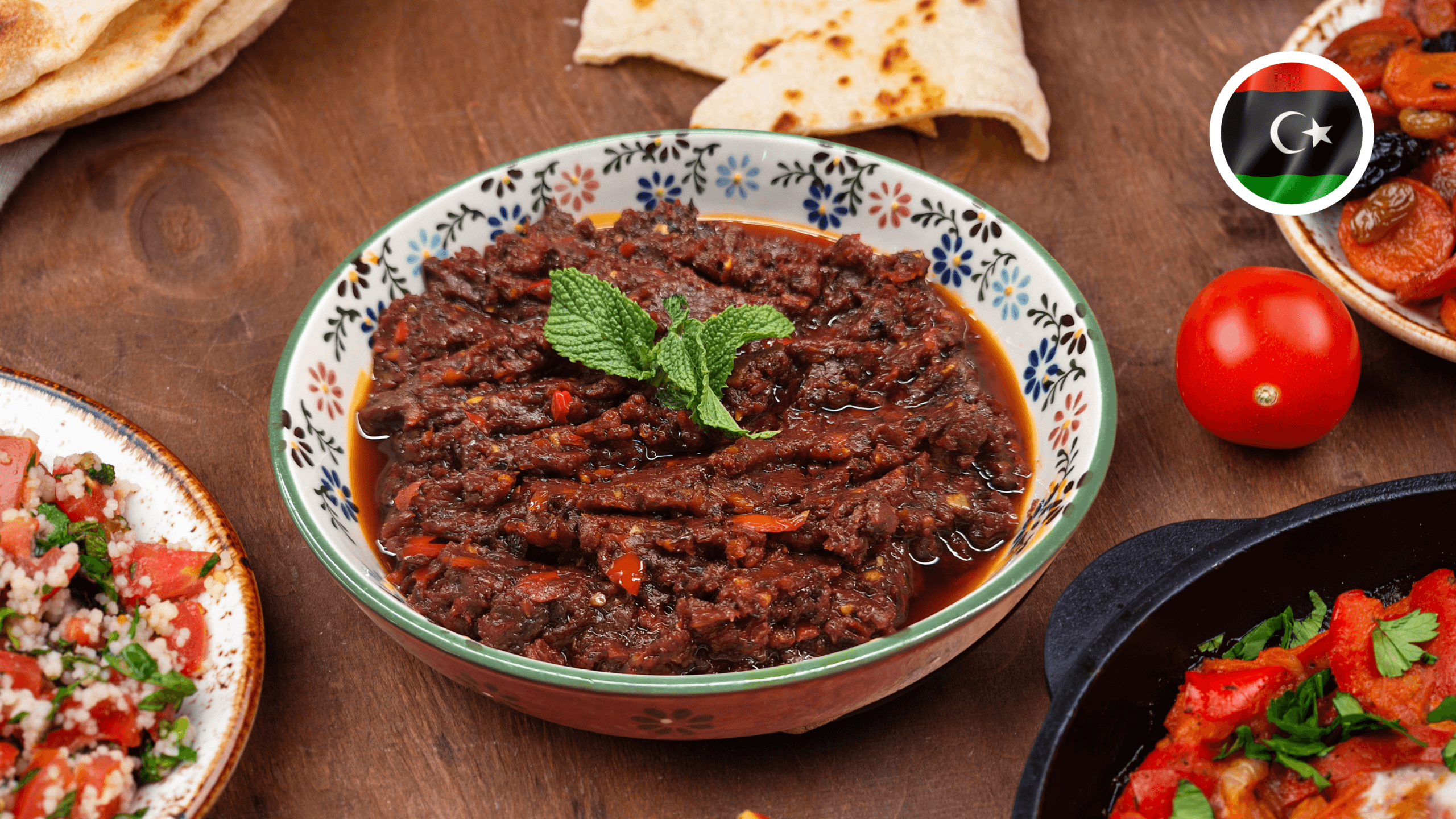
Lusa is a Libyan dip made with dried tomatoes, dried onions, tomato paste, red chilies, garlic and generous amounts of olive oil. Rich, concentrated and often quite spicy, it has a deep savory flavor with sweetness from the tomatoes and onions and warmth from caraway and turmeric.
What is Lusa?
Lusa is a thick, intensely flavored dip built from ingredients that are cooked down and concentrated rather than left fresh. Dried tomatoes and onions give it depth and sweetness, while tomato paste reinforces the rich tomato base and fresh red chilies provide heat.
The ingredients are fried or simmered in olive oil, then combined into a dense, spreadable mixture. Garlic, caraway and turmeric add aromatic warmth, while the generous amount of olive oil gives Lusa its glossy texture and helps carry the stronger flavors.
Lusa in Lybian food culture
Lusa is particularly associated with Amazigh food traditions in the Nafusa Mountains of northwestern Libya. Its use of dried tomatoes, dried onions and chilies reflects a practical way of preserving seasonal produce and turning it into an intensely flavored condiment that could be kept and used beyond the harvest season.
Rather than being limited to one way of serving, Lusa can function as a dip, spread or flavoring alongside other foods. Its concentrated tomato, chili and olive oil base makes a small amount strongly flavored, giving it a versatile place in the Libyan kitchen.
What does Lusa taste like?
Lusa is deeply savory, tangy and spicy, with concentrated tomato flavor at the center. The dried tomatoes and tomato paste give it richness and intensity, while the chilies provide a heat level that can range from moderate to very hot depending on the version.
The dried onions add sweetness, garlic brings sharpness, and caraway and turmeric contribute warm, earthy notes. Olive oil softens and rounds out the stronger flavors, giving the finished dip a rich, almost jam-like texture.
How Lusa varies
Lusa is not always made to exactly the same texture or spice level. Some versions are pounded until fairly smooth, while others are left coarser, and the balance of dried tomato, onion and chili can vary depending on local or family preference.
Seasonings can also differ, with ingredients such as caraway, coriander or other spices appearing in different versions. What generally distinguishes Lusa is the use of dried vegetables cooked in olive oil, which gives it a deeper and more concentrated flavor than a fresh chili paste.
Where does Lusa come from?
Lusa is particularly associated with communities of the Nafusa Mountains in northwestern Libya, where it has been passed down as a traditional preparation. Its use of sun-dried onions, tomatoes and chilies reflects a practical way of preserving seasonal ingredients so they could be stored and used beyond the harvest period.
In traditional preparation, the dried vegetables are fried in oil and then pounded together, often using a mortar, before being combined with olive oil and seasonings. Modern versions may use a food processor instead, but the defining idea remains the same: concentrated dried vegetables transformed into a rich, strongly flavored condiment.
Make Lusa at home
Ready to make it yourself? Follow the full Lusa recipe with ingredients, step-by-step instructions, recipe notes, and video.